- Test 1 – Does it have a centralised controller or authority? If yes, you don’t need a blockchain.
- Test 2 – Could it work fine with a standard database? If yes, you don’t need a blockchain.
- Test 3 – Is adoption going to be costly, or annoying, to some stakeholders? If yes, you don’t need a blockchain.
- If any answer is yes, skip the chain and use plain tech that you know.
How to Find a Blockchain Near Me (and Why It Quietly Matters for Your Projects)
17 September, 2026
0 comments
A Blockchain Near Me, Simply Explained
I’m just one person writing a blog, not a big team or a brand. When I look for a blockchain near me, I mean a network that fits my app ideas without a long hunt across the web. The heading of this post says it plainly. I read through source material from people who work with this tech, and I’ll reshape it in calm, plain words so you can follow.
The description promises we can spot nearby testnets and join community nodes. The sources I have don’t dwell much on local meetups, but they do help me decide whether a blockchain is right for my build. So I’ll use the phrase blockchain near me to mean the right chain for my project. You don’t need a technical degree to get the gist - I care about clear notes for readers like you.
I pulled from writings by Tom Davies, Mike Bursell, Vitalik Buterin, and others. They cover use-case fit, smart contracts, chains of trust, and settlement experiments. None of it is corporate speak. It’s just people who built things and learned hard lessons. I’ll keep my voice calm and straight.
What Does Blockchain Mean For My Project
You might ask what blockchain actually does for a small app. The source describes a blockchain as a shared record book many people can write to. It’s a distributed database of record, often called a distributed ledger. If you don’t need a place to store data, you won’t need a blockchain near me. I like that simple test - it saves time and money.
One writer I read went to a developer conference and got hooked on the tech. He said it moves so fast that a week away feels like missing a step. But the basic idea remains: a blockchain lets many actors share truth without a single boss. That matters when I look for a blockchain near me that helps my app without adding fog.
The same writer noted blockchain has fantastic properties and he loves its disruptive powers. Yet the use cases that truly exploit those powers are far fewer. So I pause and think before slapping a chain onto my idea. A plain database often serves just as well, if not better.
First Question: Do You Even Need A Database
The first step in a flow diagram from University College London is plain. If you don’t need a database, you probably don’t need a blockchain. A database is simply a place to store data. Blockchains are essentially a distributed database. So when I search for a blockchain near me, I start by asking whether my app needs to keep records at all.
If you do need a database, next consider who writes to it. If you or your app are the only one writing, a standard database is fine. The source says most apps fall in this bucket. Adding a blockchain near me would just introduce needless complexity, maybe cost.
Think of a single ordering system for selling futons. One authority decides when to send a futon. That’s a standard database job. You almost certainly don’t need to make that a chain. I keep such examples in my pocket when friends get hyped.
When You Are Not The Only Writer
Now, if a bunch of folks or apps need to write to your database, things get interesting. But if you trust them all, guess what - you don’t need a blockchain. You could use one, but you’d miss the special part that makes it unique. The source warns this adds complexity for no real gain, and many enterprise apps behind a firewall sit here.
Then ask: is there a third party everyone trusts to act as regulator? If so, you might not want a blockchain. The trade-off is between building on chains (which can be hard) and having a working tech solution. Supply-chain tracking often sits in this spot, says one author - a bit controversial, but worth a look.
Personally, I’d explore chain tech at this point in the flow and decide whether the solution warrants dropping a trusted third party. If there’s an option to keep one, business deals may be simpler with it. I’d only jump to a blockchain near me if the trust gap is real and wide.
Three Tests For Not Moving To Blockchain
Some folks designed three simple tests. If the answer to any is yes, you almost certainly don’t need a blockchain. I’ll list them below so you can check your idea fast. The hype makes businesses rush without understanding, so these tests are a calm anchor.
Three Tests For Not Moving To Blockchain
Blockchains really don’t make sense unless the tasks required in the process execution – and the trust associated with those tasks – is distributed between multiple entities.
The third test hits home for me. If I make engine parts, tracking on a chain may help. But a small ball-bearing maker with forty customers may find new systems costly and annoying. A blockchain near me should help all sides, not just the loudest.
Questions To Ask Before Picking A Blockchain Near Me
A person named Siva Kannan offered three questions to see if a process fits a blockchain. I add a fourth from a panel about stakeholder benefit. These help me when I look for a blockchain near me that truly fits instead of one that merely looks cool.
Questions For Considering Blockchain Candidates
- Is the process time-consuming? Long waits hint a shared chain might help cut drag.
- Is the process multi-partite, made up of multiple steps? Simple single steps don’t benefit.
- Is there a trust problem within the process? If nobody trusts anyone, a chain shines.
- Is there benefit to all the stakeholders? If only some win, rethink the move before build.
For example, inter-bank transfers take days due to central authorities. Healthcare payments alike. Those are multi-step and have trust gaps. A blockchain near me could cut that, but only if all sides gain - not just the big fish.
Permissioned chains can restrict who sees data, and secure multi-party computation limits exposed info. That’s a middle ground. I note it because not every job needs a fully open chain.
Permissioned Vs Permissionless Chains
Many projects are distributed ledgers, not strict blockchains. Permissionless ones let anyone join; most crypto coins are like that and use pseudonyms. Permissioned ones check who joins, which businesses like for identity binding. The source says binding identity to real-world trust is hard - lemon difficult.
If an entity gets spoofed or goes bankrupt, the trust link breaks. Once a chain is live, it’s tough to rewind those trust ties. So when I seek a blockchain near me for a business app, I note this pain and plan for change.
Trust must reflect legal and real-world links: distributors, customers, partners, other banks, makers, even drones or vehicles. Legislation shifts and firms get acquired. I keep a simple rule: write down each trust link before coding.
Smart Contract Apps And What They Really Are
The first thing to know about smart contract apps is they aren’t contracts, smart, or always on a chain. They are code that changes state when conditions are met. Ethereum made them popular with a language called Solidity. They are simply defined conditions, not magic AI.
Security during their run has three parts. Confidentiality: state may be snooped. Integrity: changes lead to disputes. Availability: a party may block processing if it hurts them. I keep these in mind for any smart contract apps I build or review.
They are not legal contracts; jurisdiction issues exist.
Best-known blockchains are crypto coins like bitcoin. Ethereum pushed non-transaction constructs with open code. Permissionless systems fit non-transaction state models for closed groups like banks or supply chains. A blockchain near me might host such code if the group agrees.
How Does Blockchain Work In Cryptocurrency
You may wonder how blockchain works in cryptocurrency . The basic idea: a chain lets parties with no prior relationship trust each other. Transactions are immutable. Bitcoin was the first and most known; many others tweak its protocol or tailor to a use case.
Privacy coins like Monero hide who sends what. This matters for users or firms that don’t want trade secrets out. When I think about a blockchain near me for a coin, I weigh whether I need that hide feature or if a plain record is fine.
The source maps a category of currencies as store of value, medium of exchange, or unit of account. Some improve on Bitcoin; some focus on privacy. I see this as a toolbox, not a religion. Pick the coin traits that match your app.
Best Application Crypto And Other Use Cases
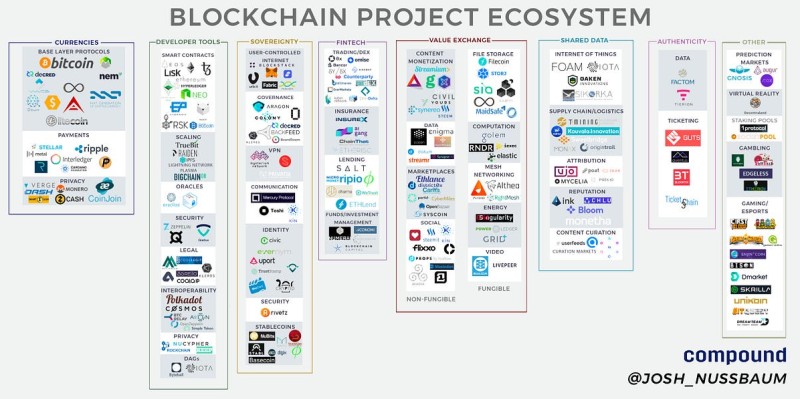
The source maps out categories of decentralized projects. The best application crypto depends on what you need: currency, tools, finance, sovereignty, value exchange, shared data, or authenticity. I’ll list them so you see the spread and where a blockchain near me might live.
Broad Categories Of Blockchain Projects
- Currencies – build better money, store of value, medium of exchange. Bitcoin first, others tailor to use.
- Developer Tools – building blocks for decentralized apps, need scale for real users beyond finance.
- Fintech – exchanges, lending, insurance; blockchains make user history tamper-proof and stateful.
- Sovereignty – trustless architecture for sensitive data, users control access not big platforms.
- Value Exchange – trust among strangers, markets for storage, compute, energy, bandwidth.
- Shared Data – open markets where value goes to data providers, not a central aggregator.
- Authenticity – represent real goods or data, immutability guards against fraud far future.
Within developer tools, a project might use Ethereum for contracts, another for compute, another for encryption. They talk to each other, enabling new use cases. That’s a good sign when I look for a blockchain near me that plays well with others instead of a walled garden.
One writer got excited about the web3 dev stack and sovereignty through user access control. I get that. Cost, privacy, and security for identity or credit scoring could capture real value. A blockchain near me could be part of that shift if I build with care.
Understanding Crypto For Dummies And Beginners
If you’re new, understanding crypto in simple terms helps. Crypto is just digital money or tokens on a chain. what crypto currency is in simple terms really means: a coin recorded on a shared ledger, not in a bank. I like plain talk because fancy words hide the simple core.
You don’t need to mine or buy straight away. The source notes how to get crypto is a common question, but first decide if you need a chain at all. A blockchain near me for learning can be a testnet, not real money, where mistakes cost nothing.
The long tail of apps where chains are convenient but not must-have is huge. Wikileaks and Silk Road used censorship resistance early, but most of us just want handy tools. I keep that sense of scale when I read hype.
Digital Artwork NFT And Shared Data
A hot area is digital artwork nfts . These use a chain to prove who owns a file. The authenticity category fits here: public chains make data tamper-proof far into the future. Sensible for fraud-ridden markets like tickets or rare goods.
Shared data projects let people take their data with them, like a reputation score. Instead of one firm owning it, the chain records it. When I explore a blockchain near me for a community app, this portability is a big plus that standard databases rarely give.
The source gives an airline data warehouse analogy. A blockchain-based project opens the market so value goes to folks providing data, not the middleman. That could flip how we think of user info. I’d watch this space for quiet wins.
How Do You Create A Cryptocurrency
Some ask how do you create a cryptocurrency . The source says the rise of Ethereum with state in each block paved the way for tokens. You write smart contracts that issue coins. But remember, if you have a single authority, you don’t need a chain.
Also, best blockchain certifications get mentioned for folks who want proof of skill. I’d say learn by building on a testnet first. A cert might help land a job, but the tech matters more than paper, and a blockchain near me should be about doing, not badges.
If you make a token, think about who runs it and who trusts it. Permissioned vs permissionless changes everything. I’d sketch the trust chain on paper before I write a line of code.
Security And Chains Of Trust
Combining blockchain with confidential computing is a neat idea. Web3 means decentralized services; confidential computing uses hardware to isolate data. Together they let anonymous providers run jobs you can trust. The source uses a turtle story: chains of trust need a bottom turtle.
Principles For Chains Of Trust
- There has to be a root of trust somewhere (bottom turtle).
- Chain only as strong as weakest link, so check each part.
- Be explicit about each link in the chain of trust.
- Some links may change, like software updates or new keys.
- Once lost trust, rebuild from layer below the break.
- Simple chains easier to validate than complex ones.
TLS certificates and supply chains both use such trust chains. Blockchains can track a diamond or car part from source to store. That’s a real use for a blockchain near me if I care about honest goods and want proof without a central guard.
Confidential computing brings a hardware trust zone and remote check of that zone. Open source software is required for real security. I trust the chip maker and the check service, but that’s a small leap compared to trusting a stranger fully.
Value Of Blockchain Technology
Vitalik Buterin wrote that there’s no single killer app for blockchain. The low-hanging fruit is picked. But a long tail of apps find it convenient. He defined a blockchain as a magic computer anyone can upload programs to, with public state.
Benefits include high uptime, honest logic, and apps that keep working even if the maker quits or gets bribed. Identity on chain uses keys; loss is a problem. Reputation can be portable. I think a blockchain near me is best for these stubborn, long-life needs where trust must outlast any one firm.
A blockchain is a magic computer that anyone can upload programs to and leave the programs to self-execute, where the current and all previous states of every program are always publicly visible.
A backdoor key with limits, like a one-month wait, can be built in. Apps talk to each other with high reliability even if the platform is only mostly up. Multiple firms can run apps that interact at high speed without network messages. That’s a quiet superpower.

Settlement Experiments With The Graph
A settlement test moved repo agreements onto blockchain rails for instant finality. DTCC settles huge trade activity; they tried an AppChain. The Graph provided a data layer to query complex assets. Results: near-instant settle, less over-collateralization.
The source says institutional finance needs modern settlement, and blockchain data infra is key. The Graph served many queries to thousands of projects. That shows a blockchain near me can be part of big finance, not just small apps, if the data layer is solid.
Real-time transparent records cut risk passed to ordinary people. Errors get caught early. I like that a chain can give a single synchronized view. It’s a strong reason to learn about a blockchain near me even if you never touch a coin.
Original assets get locked and a wrapped token issued. Smart contracts handle margin calls and net positions. Dynamic risk management gets real-time visibility. That’s a far cry from slow daily batch jobs.
Why Local Networks Boost App Development
The short description said local networks can quietly boost your app development. Even if the source didn’t detail meetups, the idea holds: using a community node or testnet close to you cuts latency and helps learning. I’d start with a public testnet or a dev sandbox.
Check out developer sandboxes like DevNet Hyperledger Sandbox to get hands-on. That’s a practical way to find a blockchain near me without hunting the whole internet. You write code, break things, learn fast, and meet folks who share pics and stats.
A local group can review your smart contract apps and flag weak links. The source notes community nodes and open source build trust. I’d rather show my draft to a known human than toss it to a faceless forum.
My Plain Take On Picking Your Chain
I’ll wrap my notes by saying: don’t force a blockchain near me onto a job that a plain database does. Use the tests, ask the questions, map the trust. If you do build, start on a testnet and keep your code simple.
The related phrases like understanding crypto in simple terms and digital artwork nfts show how broad this space is. I’m just one person sharing what I read. You can do the same - and maybe we’ll both find the right chain for our own back yard. - Álvaro
Comments on “How to Find a Blockchain Near Me (and Why It Quietly Matters for Your Projects)”
No comments yet. Be the first to share your thoughts.