
Understanding What a Cryptocurrency Miner Is and Why It Matters

What Is a Cryptocurrency Miner and How It Works for Beginners
A cryptocurrency miner is a program, a computer, or a specialized device that does computational work on a blockchain. Its main job is to check transactions and add them to the blockchain, earning rewards for that work. Think of it as a digital bookkeeper. But it's not like keeping paper records. It's more like solving puzzles to prove you did the work honestly. Whether you run it on a personal computer or a specialized rig, the miner validates blocks by solving puzzles, helps keep the network secure, and can be used for legit earnings or, if hidden, as a threat that security tools watch for.
A cryptocurrency miner is a program, computer, or specialized device that performs cryptocurrency mining.

If you're wondering what cryptocurrency mining actually is , it's not about digging up coins like gold. It's computational work. Miners collect transaction data, search for a numerical solution to a difficult puzzle, and use the solution to stamp transactions into a public ledger. The term gets misused a lot, but the real crypto mine runs 24/7 in a noisy server room, not a cave.
In a proof-of-work system, miners act as bookkeepers. They group transactions into blocks, compete to solve a puzzle, and the first one to crack it gets to add the block to the chain. Everyone else checks the work, and if it's valid, they move on to the next block. That’s how the whole thing stays honest without needing a bank or payment processor in the middle.
How a Miner Fits Into the Blockchain
Bitcoin users create wallets and send transaction messages to the network. A transaction says, in effect, that one user sent a certain number of bitcoins to another. Miners gather these unverified transactions and work on groups called blocks. Here's how it usually goes:
The mining sequence step by step
- Participants broadcast transactions to the network
- A miner selects a group of unverified transactions
- The miner uses the solution from the previous block
- The mining computer performs many hash calculations while searching for a random number called a nonce
- A qualifying hash or nonce is found that meets the difficulty target
- The solution is sent to other miners for quick verification
- Once verified, the transactions are grouped into a new block and added to the blockchain
- The successful miner receives cryptocurrency rewards and transaction fees
- Miners start on another block linked to the new one
The link between each new block and the preceding block makes the transaction history a chain.
Hashes, Nonces, and the Math Behind Mining
A hash function turns input data into a fixed-length result. In mining, that input includes transaction data, the previous block's hash, and a candidate nonce. Miners keep changing the nonce and rehashing until they find an output that meets the network's target. Bitcoin's worldwide difficulty adjusts so blocks come roughly every 10 minutes, no matter how many miners are racing.
Hash rate measures how fast a miner works, in hashes per second. More hash rate means better odds, but it also means the network might get harder. That’s the self-balancing act built into Bitcoin.
Not Every Cryptocurrency Uses Mining
Bitcoin primarily uses Proof of Work, where miners solve puzzles. Other networks use Proof of Stake, where validators lock up tokens and get chosen to confirm blocks. These participants do a similar job but are usually called validators or delegators, not miners. If you're trying to understand how to mine cryptocurrency , it only applies to proof-of-work chains.
Not every cryptocurrency uses mining.
Solo Mining vs. Mining Pools
Solo mining means running a full node and competing alone. It's risky because the bigger the network, the harder it is to win a block. Back when Bitcoin was new, one computer could do it. Now, with so many miners, it's mostly luck.
That’s why most miners join mining pools . A pool combines everyone's computing power and splits the rewards. You give up a cut to the pool operator, but you get steady, smaller payouts instead of waiting years for one jackpot.
Solo mining vs pool mining
- Solo mining keeps the whole reward but has high variance and long waits
- Pool mining offers smaller, more frequent rewards with a fee
- Solo mining requires running a full node independently
- Pool mining requires trusting an operator and sharing work
The Evolution of Mining Hardware
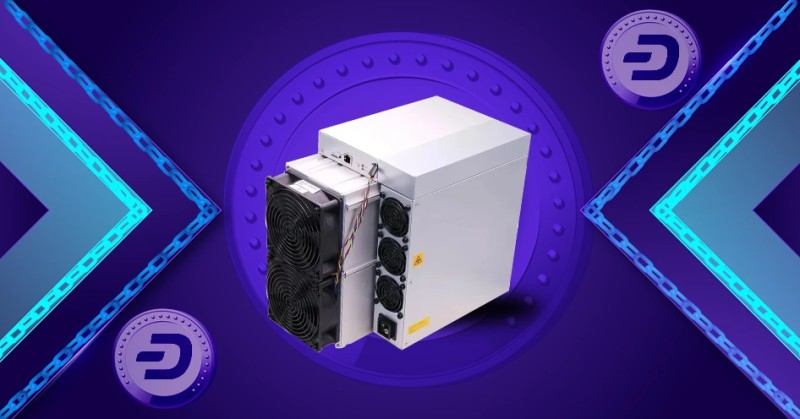
Early Bitcoin miners used regular home computers. Then came GPUs, which were much faster. But the real game-changer was the ASIC miner, designed specifically for Bitcoin. ASICs boosted performance by orders of magnitude, making old hardware pointless. After 2013, personal computers became inefficient for Bitcoin mining.
Today, industrial mining farms house tens of thousands of rigs. These setups lower per-unit costs but also crank up competition. Individual miners now rely on pools just to survive.
Block Rewards, Halving, and Profitability
Bitcoin's block reward started at 50 BTC and halves roughly every four years. It dropped to 25 in 2012, then 12.5 in 2016, and 6.25 in 2020. Each halving makes mining harder to profit from unless Bitcoin's price rises too.
Profitability depends on three things: electricity cost, hardware efficiency, and Bitcoin's price. If electricity eats up more than your reward, you're losing money. mining efficiently matters a lot when margins are thin.
Electricity can be a larger cost than the cryptocurrency earned.
Unauthorized Mining and Security Risks
Mining software isn't always legitimate. If you find it running without permission, that’s a red flag. Hidden miners can hog CPU, GPU, and bandwidth. They may seem harmless, but they often signal something worse.
When mining shows up on a web server, database, or application host, it can mean an attacker exploited a vulnerability. That miner might be just the first payload. The same breach could have installed a backdoor, ransomware, or stolen credentials. Don't just delete the miner-patch the hole it came through.
Signs your system is mining without consent
- A persistent background process consuming resources
- New applications or services you didn't install
- Unexpected outbound network connections
- CPU or GPU usage spiking with no clear cause
Detecting Cryptocurrency Mining Behavior
Security teams look for clues across files, processes, and network traffic. A suspicious file might have a known miner hash or connect to a pool domain. A mining process often spawns from PowerShell, Java, or another server process. Command-line arguments mentioning coin, pool, or a crypto name are a strong sign.
A miner started by a Java, PHP, or HTTPD process may indicate that the server itself was exploited.
On the network side, watch for DNS queries with coin or pool terms, connections to mining pools, or outbound traffic to suspicious hosts. No single indicator proves anything-but combined, they tell a story.
When Web Servers Start Mining
Attackers love mining on compromised servers because they run 24/7. One case involved a Java WebLogic server that spawned PowerShell, which downloaded a Monero miner. Removing the miner didn’t help-within days, the same exploit hit again.
The real fix? Patch the vulnerability. Otherwise, you're just putting a band-aid on a bullet wound.
Preventing Remote Code Execution
RCE exploits are common entry points for miners. A server worker spawns a child process it shouldn’t-like PowerShell under Java or a shell under Apache. Auditing those child processes helps catch the breakout.
Prevention starts with basic hygiene:
Habits that block mining-based attacks
- Monitor web-server processes for unexpected child activity
- Run a simple vulnerability-management routine and patch regularly
- Test applications for input flaws before deployment


Comments on “Understanding What a Cryptocurrency Miner Is and Why It Matters”
No comments yet. Be the first to share your thoughts.