How to Compare Crypto Exchanges and Find the Best Fit for You
How to Compare Crypto Exchanges and Find the Best Fit for You
Choosing a crypto exchange can feel like standing in front of a wall of tabs. If you are looking for the best exchanges for crypto , don't start with the first name you see or the longest coin list. Start with how you will use the account. Are you buying a small amount, trading each week, or holding coins for years? The right platform will not look the same for each person.
There is no single winner for everyone. There is only a better fit for a particular person, coin list, and way of spending money.
I like to compare exchanges like any big money decision: one factor at a time. Fees matter, but so do custody, legal access, supported assets, withdrawal rules, and help when something goes wrong. The best cryptocurrency exchanges for a beginner may be poor for a heavy trader. A site can look safe and still be wrong for your country.
What a Crypto Exchange Actually Does
A cryptocurrency exchange is an online platform for buying, selling, or trading digital assets. You can use dollars or euros to buy Bitcoin, Ethereum, stablecoins, or other tokens, or trade one coin for another. The exchange matches buyers and sellers, keeps an order book, supplies liquidity, and charges for deposits, trades, withdrawals, spreads, or extra services.
What an exchange may handle
- Fiat purchases and withdrawals through bank, card, or local payment rails.
- Spot markets and crypto-to-crypto trades.
- Order matching, liquidity, and price quotes.
- Custody for users who leave assets on the platform.
- Charts, order types, APIs, and automated execution.
- Margin, derivatives, staking, lending, cards, and token launches on some venues.
That makes an exchange a little like a stock brokerage, an online marketplace, and a payment provider. Early crypto trading was less simple; people used mining, faucets, forums, and peer-to-peer arrangements. Mt. Gox showed the danger of weak security and poor transparency when it collapsed in 2014, with a reported loss of about $460 million in customer funds.
Centralized, Decentralized, P2P, and Hybrid Exchanges
Centralized exchanges, or CEXs, are companies. They control transactions and hold assets for users. You deposit fiat or crypto, place market, limit, or stop orders, and rely on a central matching engine. In the U.S., opening an account often means giving a name, government ID, address, and related details for KYC checks.
Four exchange models
- CEX: Easy fiat access, broad assets, customer support, and higher limits, but the company controls custody and can freeze accounts.
- DEX: Smart contracts and self-custody wallets trade directly. Many use automated market maker pools, but users face network fees, bugs, scams, and lost keys.
- P2P: Buyers and sellers set terms, often with escrow, but fraud, phishing, and disputes remain possible.
- Hybrid: Smart contracts sit beside some central control. The balance changes by platform.
A DEX can remove the exchange operator from a trade. It cannot remove risk from the setup.
Fees: The Small Number That Is Often Not Small
A fee page may show only maker and taker rates, but that is not the whole bill. Payment method, instant buy and sell, spread, currency conversion, withdrawal, API, staking, and borrowing charges can all matter. If I am looking for a low-fee crypto exchange , I read the whole path from funding to cashing out.
Fee details to compare
- Maker and taker rates for spot trades.
- Instant-buy and instant-sell charges.
- The spread between the buy and sell price.
- Deposit fees by bank, card, or network.
- Withdrawal fees and minimum amounts.
- Currency-conversion spreads.
- API, listing, or advanced-service fees.
- Staking, borrowing, or other extra charges.
Historical examples in the source put trading fees from 0% to 5%, depending on payment method and transaction type. One example said ten $1,000 trades on Coinbase could cost $60, while an $11,000 trade cost $44 under the same setup. Your price can depend on order size, market, pricing tier, and payment rail, so treat those figures as examples rather than promises.
The cheapest trade is not always the cheapest way to buy or sell crypto.
Speed, Liquidity, and Price Quality
Speed includes more than order matching. It includes identity checks, fiat processing, and withdrawal settlement. A matching engine may handle orders in milliseconds, while a bank transfer can take days. A platform's speed claim is not a promise for every user, token, or network.
Liquidity and speed checks
- Daily and monthly trading volume.
- Depth at the best bid and offer.
- Size of the spread.
- Order-fill speed.
- Slippage for small and large orders.
- How quickly withdrawals settle.
- Price differences across exchanges.
Fast order handling still does not mean a withdrawal lands instantly. Exchange checks, blockchain congestion, network fees, address checks, security reviews, and banking hours can add time. During a sharp market move, a wide spread or slippage can cost more than a small fee.
Speed matters, but price quality tells you whether the speed got you a fair fill.
Assets, Trading Pairs, and Stablecoins
The right asset list depends on your plan. A Bitcoin-and-Ethereum buyer may care more about reliable dollar deposits and deep liquidity than a long altcoin list. A niche-token trader may want broad listings and early access. More tokens are not automatically better; thin markets can bring wide spreads, delistings, or manipulation. When I look at good crypto exchange sites , I want the market and fee details close at hand.
Asset questions
- Does the exchange support the exact pair you need?
- How much volume and depth does that pair have?
- Are listings active, liquid, and clearly explained?
- Can you move between dollars, stablecoins, and crypto?
- Which network or issuer supports the asset?
Stablecoins such as USDT, USDC, DAI, Gemini Dollar, and Paxos-issued assets can make settlement and dollar-denominated exposure easier. They may also have lower volatility than many crypto assets, but they still carry issuer, liquidity, smart-contract, and legal risks. A strong crypto trading platform supports your pairs with enough depth for your order size.
Security Starts With Custody and Account Controls
When I read exchange security claims, I split the question in two. How does the platform protect assets, and how does it protect my account? Cold storage, hot-wallet limits, multi-signature wallets, audits, fund segregation, proof of reserves, insurance, and oversight answer the first question. 2FA, passkeys, withdrawal allowlists, alerts, and recovery planning answer the second.
Security controls to check
- How much is held in cold storage, and what does the hot wallet handle?
- Are multi-signature and hardware controls used for company keys?
- Are reserves and liabilities checked by an outside party?
- Are customer funds kept apart from company funds?
- Can you use an authenticator app, passkey, or hardware key?
- Can you allow withdrawal addresses and delay new ones?
- Are API trading and withdrawal rights separated?
- Is there a recovery plan and a way to test a small withdrawal?
Cold storage is one lock on one door. It is not a magic shield around the whole house.
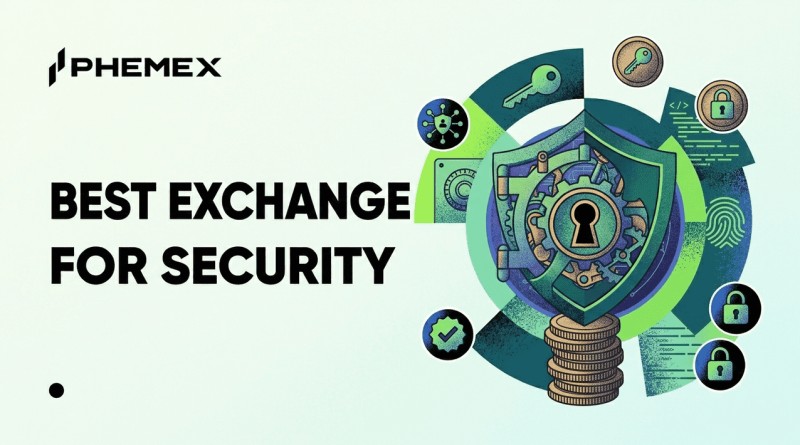
Cold storage lowers online attack exposure, but it does not stop a compromised device, insider theft, a bad withdrawal, or a blockchain mistake. A proof-of-reserves page is a snapshot, not a promise that every asset is free of other claims or that every withdrawal will be instant.
Licenses, Reserves, Insurance, and Proof
Geography comes before a feature list. A strong exchange in one country can be restricted in another. U.S. readers should check the exact legal entity, state rules, and product. European venues may operate under MiCA, while U.S. venues may deal with FinCEN, state licensing, SEC requirements, or CFTC rules where they apply.
Trust signals to verify
- Legal licenses and regulator records.
- KYC and AML controls.
- Proof of reserves and proof of liabilities.
- Segregation of customer funds.
- Independent audits, SOC reports, or ISO certifications.
- Insurance policies with clear limits and exclusions.
- Ownership, support, and withdrawal terms.
Reserve reports need context. Proof of reserves points to assets held; proof of liabilities points to what a platform owes. A dated snapshot cannot show every future claim. Cold-storage figures also change: one security guide cited 98% for Coinbase and 95% for Kraken, Gemini, Binance.US, and Crypto.com, while other sources gave different numbers. FDIC or SIPC coverage may apply to eligible cash or securities, not automatically to crypto. Check the platform's own security page and policy terms.
A license, an audit, and an insurance policy are signals to verify-not a safe promise.
What FTX Changed About Exchange Reviews
The November 2022 collapse of FTX became a defining example in exchange safety. A later account reported that customer deposits above $8 billion disappeared. FTX and Alameda Research had mixed customer funds with company risk, showing that good technology cannot save weak governance. FTX US later appeared in a security list as a warning case. Public claims about cold storage and insurance did not erase poor fund segregation and oversight.
Technical security and financial custody have to stand together.
After FTX, I would ask whether customer assets are segregated, reserves and liabilities are clear, audits are independent, licenses are real, and insurance terms are disclosed. I would also ask who owns the exchange and who controls customer money. Cold-storage claims do not answer those questions by themselves.
Coinbase, Binance, Kraken, and Gemini
These four names often come up when people ask for the best U.S. crypto exchanges , but they serve different needs. Coinbase is often the easiest fiat starting point. Binance is tied to low fees and a large global product set. Kraken pairs a long history with a retail and pro setup. Gemini puts weight on licenses, audits, and compliance.
Four large exchange profiles
- Coinbase: Founded in 2012, Coinbase pairs an intuitive retail app with Coinbase Advanced, a custodial account, and a self-custody wallet. A source cited hundreds of tokens, education tools, staking, cards, and broad fiat access. Reported drawbacks include complex fees, support complaints, account-closure complaints, and custodial risk.
- Binance: Global Binance was described as the largest by volume, with spot, margin, P2P, futures, options, NFTs, and many order types. Historical figures cited more than 500 coins and a standard rate up to 0.1%, with BNB discounts. Binance.US is separate, with fewer assets and features, state limits, a harder interface, and no phone support in one comparison.
- Kraken: Founded in 2011, Kraken has a retail site and Kraken Pro. The source cited more than 185 coins, 24/7 support, 95% cold storage, monthly reserve reports, hardware keys, address allowlisting, and a delayed Global Settings Lock. Instant Buy and Sell fees and spreads could be high.
- Gemini: Founded in 2014, Gemini emphasizes a New York BitLicense, SOC reports, passkeys, and operation in all 50 states. Claims included 95% cold storage, withdrawal controls, segregated funds, and Aon insurance. Its smaller altcoin list, higher instant fees, and limited phone support may matter to some buyers.
For readers asking about the best U.S. crypto exchanges , the exact entity matters. A global platform and its U.S. entity may have different coins, products, rules, and state coverage. Read the terms for the account you will actually open.
Robinhood, Crypto.com, and Other Mainstream Options
A simple app can make crypto easier to reach, but each product has a narrow job. Robinhood added crypto in 2018 beside stocks and options. The source cited zero commissions in its covered period, mobile trading, eligible FDIC and SIPC coverage for traditional balances, cold storage for most crypto, and a self-custody wallet. Limits included a small coin list, outages, support complaints, and fewer withdrawal controls.
Crypto.com, founded in 2016, built its identity around a mobile app, card, rewards, staking, borrowing, and lending. A 2023 profile cited more than 250 coins and about 50 million users in roughly 90 countries. A security guide cited 95% cold storage and $750 million in insurance across digital assets and fiat. Policy scope, app dependence, support, the CRO link, and the MCO-to-CRO migration were listed as concerns.
Other platforms and their main draw
- Phemex: One security-focused review placed it first globally for mandatory withdrawal 2FA, passkeys, address allowlisting, anti-phishing codes, and round-the-clock reserve and liability information. The source also noted growing documentation and access limits for some U.S. residents.
- Token Metrics Exchange: The source highlighted 90% cold storage, multi-signature controls, machine-learning fraud scores, phishing detection, and threat alerts. These are platform claims, not a promise that losses cannot happen.
- KuCoin: It was described as an international low-fee exchange with quick processing and 95% cold storage. A U.S. guide listed it among large exchanges that did not operate in the United States.
- HTX and Gate.io: HTX, formerly Huobi, was framed as a lower-cost option with 85% cold storage in its U.S. operations. Gate.io was listed with 90% cold storage and reserve reporting. Availability and protections differ by entity and country.
- Cash App: It was presented as a focused mobile Bitcoin buy-and-sell app, not a broad exchange for altcoins, derivatives, or advanced order types.
These venues can fit a narrow need. A mobile Bitcoin buyer may not need margin markets. A security-minded trader may care more about withdrawal locks and reserve reports than a rewards catalog. The top crypto exchanges are not one ladder; they are different tools.
DEXs, P2P Exchanges, and India-Focused Options
A decentralized exchange gives you direct wallet control and no usual signup. Uniswap supports Ethereum assets and routes to other networks, while PancakeSwap serves BEP-20 assets on BNB Smart Chain. Many DEXs use automated market maker pools, where assets are pooled and smart contracts price the trade. That can offer broad access, but network fees called gas, smart-contract bugs, impermanent loss, and scams remain.
P2P markets connect buyers and sellers directly. Bisq adds an open-source model and 2-of-2 multi-signature wallets, so both parties usually take part in a trade. That can reduce reliance on a central operator, but software, backups, fraud, and counterparties still matter. In India, CoinDCX and Bitbns cover spot and more advanced trading; Zebpay focuses on intraday trading and lending; Unocoin, BuyUcoin, and Giottus serve newer users with education, rewards, or simple investment products.
Questions for a DEX or P2P market
- Can you control the wallet and keep the seed phrase offline?
- Which chain, contract, and token pairs are supported?
- What gas, spread, and liquidity-provider risks apply?
- Is there a direct dollar route or normal support desk?
- What local tax, legal, and privacy rules apply?
Do not choose a DEX just because the word decentralized sounds safer. Choose it when direct control and asset access matter more than easy dollar access, phone support, or a familiar account. Match the structure to the job.
Multi-Exchange Portals and Execution Quality
A multi-exchange portal can put several accounts in one place. Bitsgap was described as connecting more than 15 exchange accounts, with encrypted API keys, TradingView charts, smart orders, bots, and grid or DCA strategies. That can save time when you use several venues. API rights still matter: a portal may see balances and place trades, while withdrawal rights create a much larger risk. Jurisdiction and support still belong to each exchange.
Execution details that matter
- API permissions and withdrawal rights.
- Slippage against the arrival midpoint.
- Fill and rejection rates.
- Effective spread.
- Results by order size.
- Price depth and quote speed.
- Independent benchmark prices.
An aggregator is a map of several exchanges. It is not a vault that makes every stop on the map safe.

For larger orders, best execution is deeper than the posted fee. Crypto liquidity is split across exchanges, over-the-counter desks, and market makers. A fair review can compare an order with an aggregated midpoint from several venues and measure the fill, spread, slippage, and order size. This shows whether a platform gives you a fair price, not just a fast one. For very large trades, an over-the-counter desk may be another route, but the source presents it as more suited to advanced users.
Rankings by Use Case
Rankings change because the test changes. A low-fee platform may have weak support for your country. A security-first list may put little weight on token selection. The useful question is not which number one is best. It is which platform fits this job. That is how I compare the best exchanges for crypto without treating a ranking as a verdict.
A plain-language use-case map
- Beginner: Coinbase, Binance.US, Gemini, or Crypto.com and Cash App for mobile.
- Low fees: Binance, Kraken Pro, and Robinhood's cited zero-commission offer. Check the full cost.
- Advanced trading: Kraken Pro, Binance, Gemini, CoinDCX, and Bitbns.
- Altcoins: Binance, Binance.US, Gemini, Bitmart, and BitMEX. Check pair liquidity.
- Mobile: Crypto.com, Cash App, Coinbase, Robinhood, Binance.US, and Gemini.
- Security and compliance: Phemex in one framework; Coinbase, Kraken, Gemini, and Binance.US in other reviews.
- Large or established: Binance, Coinbase, Kraken, OKX, Gate.io, KuCoin, and Binance.US.
- Bitcoin only: Cash App for a narrow mobile need.
When you see a list of the top U.S. crypto exchanges , check whether it means the global company or the U.S. entity. Binance and Binance.US are separate products, and state rules can change what you can open. Availability is part of fit, not a footnote.
My Simple Exchange Comparison Worksheet
I use a fixed order so one strong feature cannot hide a weak one. I put each exchange name in one column and each question in the next. I fill in facts from the fee page, security page, withdrawal rules, and regulator records. I do not use a dated review to answer a question that the exchange's own terms can answer.
A 10-point comparison sheet
- Exact legal entity and country or state availability.
- Supported assets and pairs.
- All-in cost from funding to withdrawal.
- Spread, depth, and slippage for your order size.
- Custody, reserves, liabilities, and fund segregation.
- 2FA, passkeys, allowlists, and withdrawal locks.
- Deposit and withdrawal methods, limits, fees, and times.
- Support hours, languages, and complaint record.
- Need for staking, margin, APIs, cards, or other products.
- Tax records, ownership, and recovery plan.
Give the most weight to what would hurt you if it failed. A long token list cannot cancel a weak withdrawal policy. A low fee cannot cancel a lack of legal access. A security badge cannot cancel a lost seed phrase. This is how I turn a good crypto exchange claim into a choice I can explain.
A clear comparison is more useful than a long leaderboard.
Questions to Ask Before You Deposit
Before sending money, I check the legal entity, country or state availability, full fee schedule, supported pairs, liquidity, withdrawal limits, identity rules, and support hours. I also look for address controls, reserve information, fund segregation, and clear insurance terms. If a page hides those facts, I slow down.
A pre-deposit check
- Does the platform serve my exact location and product?
- What is the full cost of my likely trade and withdrawal?
- Which assets and pairs have real depth?
- Can I use a hardware key, passkey, or allowlist?
- Are customer funds kept apart from company funds?
- What does the insurance policy actually cover?
- Can support resolve identity and withdrawal problems?
- Are fees, limits, and tax records easy to find?
A good exchange choice is only one part of protecting your money.
Account setup should include a recovery plan, trusted-device review, withdrawal-address check, and a record of what the exchange may report for taxes. A regulated exchange should never ask for your bank password. Use a separate email, a unique password, a password manager, and 2FA or a passkey. For long-term holdings, a hardware wallet such as Ledger or Trezor can keep assets away from an exchange account.
Which Exchange Has the Strongest Security?
There is no single answer. One security-focused review named Phemex for its account controls and reserve tools. Other post-FTX reviews placed Coinbase, Kraken, and Gemini in the highest security tier, while a retail-focused review favored Coinbase for U.S. readers. Gemini is often chosen for its BitLicense and audit signals. These are different tests, not one final score.
Questions for a security choice
- Which account controls can you actually turn on?
- How are customer assets held and separated?
- Are reserves, liabilities, and audits independently checked?
- Does the platform serve your country and product?
- Can you withdraw safely when you need to?
For your own answer, weigh custody, legal access, account controls, assets, liquidity, support, and withdrawals together. A platform with strong documentation may still be wrong for your country. A simpler app may be safer for you if you use passkeys, keep a small exchange balance, and hold the rest in self-custody. That makes the best crypto exchange for you the one that passes those checks for your own use.
Common Questions About Crypto Exchanges
Crypto exchange questions often come down to custody, cost, and access. Here are short answers to the ones I see most often.
Common questions
- Are decentralized exchanges safer? Not in every case. A DEX removes the exchange company as custodian, but you still must protect a wallet, check a contract, choose a network, and avoid scams. A CEX usually makes dollar access and support easier, but adds account freezes, outages, and platform risk.
- How much money do I need? Most centralized exchanges allow small purchases, often only a few dollars, though minimums vary by platform and payment method. Start with an amount you can afford to lose while you learn.
- What about taxes? In the cited U.S. information, buying crypto by itself is not a taxable event, while selling or disposing of it can create a capital gain or loss. Tax rules vary by place and person, so keep records and ask a qualified tax professional when needed.
- What should I check before the first deposit? Check the legal entity, location rules, all fees, pairs, liquidity, withdrawal terms, custody, reserves, account controls, insurance scope, support, and tax records. A small test withdrawal can tell you more than a long marketing page.
Fees, listings, limits, and protections can change, so use the exchange's own terms when you act. Start with a small test deposit, enable the security controls, and keep the written comparison sheet.
Comments on “How to Compare Crypto Exchanges and Find the Best Fit for You”
No comments yet. Be the first to share your thoughts.