Making Money with Cryptocurrency: Methods Worth Comparing Before Starting

Making Money with Cryptocurrency: Methods Worth Comparing Before Starting
Questions about make money from cryptocurrency often carry a hidden hope: find one method, put in a little money, and watch a balance grow. That is why clean income claims feel so tempting. I understand the wish, but cryptocurrency does not offer one safe shortcut. A person can gain from price rises, rewards, trading fees, mining, or paid work. None of those paths comes with a promise.

The search phrase “cryptocurrency how to make money” is blunt, but the question is fair. Crypto markets can rise fast and fall just as fast. They also run without a normal daily break, so prices can move while you sleep. The useful question is not which method prints the largest number. It is which method you can understand, afford, and keep using without betting money you need.
Beginner's 2025 Guide to Crypto Investing
What Different Crypto Income Methods Mean
“Making money with crypto” can point to more than one thing. You may earn when a coin rises, receive new coins for staking, earn trading fees, get paid for mining, or sell your time and skills. Each source of income has its own catch. Price gains can vanish. Rewards can fall in value. Work may stop when the client or audience goes away.
What each income source asks from you
- Price gain: You buy an asset and hope its market price rises above your purchase and costs.
- Staking reward: You lock or commit coins to a network and receive more tokens under its rules.
- Trading or fees: You trade assets or provide liquidity and receive gains or transaction-fee shares.
- Mining or node work: You supply computing power, equipment, uptime, or network service.
- Paid work: You exchange a service, such as writing, coding, design, research, or support, for payment.
There is no single route to large gains.
Some cryptocurrencies have also paid periodic dividends or distributions to holders. The source names COSS, CEFF, NEO, and KUCOIN as older examples, but they are not guaranteed income assets. Owning a token does not make it a share in a company. You still need to check its payment rules, record, liquidity, token supply, and price. And remember that the basic rule for any crypto investment is simple: commit only money you can afford to lose.
Buy and Hold
Buy and hold means buying crypto and keeping it through price swings instead of reacting to every move. You may make a gain if the selling price covers the purchase price and relevant costs. You may also lose money for months or years. Holding reduces daily action, but it does not remove market risk, platform risk, or security risk.
What buy and hold asks you to check
- Read what the coin or token is used for and who supports its network.
- Check whether the asset has enough trading volume for you to sell when needed.
- Review the wallet, exchange, fees, withdrawal process, and security history.
- Decide how much a full price fall would cost you before making the purchase.
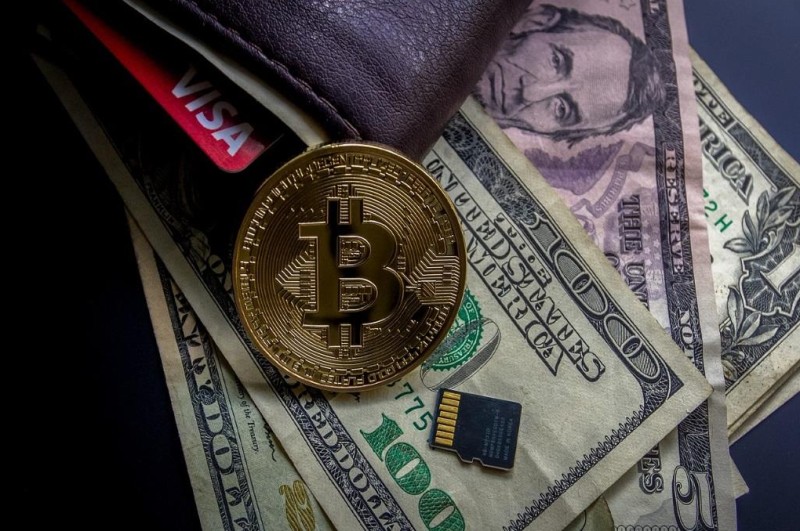
When people ask about investing in crypto , I would start with the asset rather than its recent price chart. Bitcoin, Litecoin, Ethereum, Ripple, and many altcoins have been tied to long-term holding, but each has its own risks. A cheaper altcoin is not automatically safer just because its price per coin is lower. For anyone considering buying a crypto coin , spread out any amount you can’t lose across assets you have studied. And remember that investing in crypto with care still means accepting that the whole amount may fall.
Day Trading and Swing Trading
Day trading tries to catch price changes within a trading day. Swing trading holds positions for days or weeks. Both require more attention than buy and hold. A trader studies charts, market news, trading volume, and the reasons a coin may rise or fall. A prediction can still be wrong, and leverage can turn a small move into a large loss.
What active trading asks you to learn
- How to read price charts, volume, support, resistance, and common chart patterns.
- How to study project fundamentals without treating them as a sure forecast.
- How to set a position size, stop level, and limit before entering a trade.
- How exchange fees, bid and ask spreads, withdrawals, slippage, and taxes affect a gain.
Day trading is more involved than simply purchasing an asset and waiting for it to rise.
Crypto trades around the clock, so positions can change outside normal market hours. Automated bots and signal services do not remove that risk. The source mentions a service that reads Bitcoin-related signals and places small trades, but it gives no proof of profit. Treat any automated return claim with care. A chart signal is an opinion about the market, not a guarantee.
Arbitrage Across Crypto Exchanges
Arbitrage means buying the same coin at a lower price on one exchange and trying to sell it at a higher price on another. Price gaps can come from different trading volume, regional demand, order structure, or liquidity. The source describes gaps of roughly 5% to 30%, but that spread is not the same as a profit you can keep.
A quoted price difference does not guarantee an executable profit after fees, slippage, and transfer delays.
Withdrawals may take time, and the buying exchange may release the coin after the gap has vanished. Fees can eat much of the spread. The selling exchange may lack enough demand at your chosen price, or it may not support the asset at all. Bots can watch many exchanges and place orders faster, but they cannot remove those limits. The gap must still exist after every cost and delay.
Staking Crypto and Running Nodes
Staking crypto means committing coins to a blockchain so a network can select a validator to help check or create transactions. In return, a participant may receive more coins or tokens. That reward comes from the network’s rules, not from a promise made by a platform. The market price can still fall, and some networks can lock funds for a set time.
What staking asks you to compare
- Flexible staking lets you withdraw sooner, but the rate and features may differ.
- Locked staking may offer a stated rate for a set period, with less access to the coins.
- Reward rates change with network rules, fees, balances, validator work, and the amount staked.
- A large balance does not guarantee a large reward or protect you from a token-price drop.
A full node stores blockchain data and helps check transactions. A validator in a proof-of-stake network adds validation duties and may receive staking rewards. Some older networks also use the term “master node” for a funded wallet or node that keeps a live record of network activity. These setups need equipment, security, steady internet service, software updates, and time. The source names DASH and PIVX as examples, along with stakeable assets such as NAV Coin, Neblio, and Decred. For staking tax records , save reward dates, amounts, wallet addresses, fees, and the value shown at each event.
Personal Story: Making Money with Crypto
Yield Farming and Liquidity Pools
Yield farming is a more technical form of providing assets to a decentralized exchange or lending pool. Many exchanges use an automated market maker. Instead of matching a buyer with a seller, the trade runs against a pool of tokens. Depositors can receive a share of trading fees, lending interest, or token rewards.
What yield farming asks you to inspect
- The people building and running the project, plus any past work on its security.
- Smart-contract audits and the known ways a contract or governance system could fail.
- Community talk, user activity, liquidity, and signs that quoted rewards are hard to sustain.
- The pool’s stablecoin, bridge, token, and governance risks in addition to price changes.
A higher reward rate does not cancel the risks that created it.
The biggest issue is often impermanent loss. It happens when the value of your deposited pair falls below what simple holding would have produced. Trading fees may not cover the gap. Source examples include Uniswap, Aave, and PancakeSwap, and the source quotes some reward ranges for them. Those figures are examples from the source, not promises. A yield number without its method, risks, and asset assumptions tells only part of the story.
Crypto Lending and Borrowing
Crypto lending lets an asset holder loan digital assets to a borrower and receive interest. The loan is often backed by other cryptocurrency placed as collateral. A borrower may use the funds to avoid selling an existing position, trade with more exposure, or meet a short-term need. The lender may earn interest without selling the asset that backs the loan.
What crypto lending asks you to check
- Who holds the collateral and who controls withdrawals and account permissions.
- What happens to the loan if the collateral drops and triggers liquidation.
- Whether the smart contracts, exchange, and borrower have been tested or reviewed.
- How interest is set, whether it changes, and what fees or hidden terms apply.
A platform may support 500 or more wallets, exchanges, and DeFi links, but a long connection list does not prove safety. Check custody, authentication, withdrawal controls, legal status, and what happens if the platform stops working. Lending can produce interest while the borrower keeps exposure to the same asset. A calm-looking return can hide a sharp collateral loss.
Cryptocurrency Mining
Mining uses powerful computers to do proof-of-work jobs that help validate transactions and secure a blockchain. Miners receive newly created tokens for successful work. On proof-of-work networks such as Bitcoin, that process uses electricity and hardware. Mining income is tied to the network’s difficulty, the price of the mined coin, and the miner’s uptime.
What mining asks you to pay
- Mining hardware with enough power and memory for the coin and network.
- Electricity, often one of the largest running costs for a miner.
- Cooling, space, internet service, replacement parts, and technical maintenance.
- Time for monitoring, software updates, security, and fixing shutdowns.
Mining is not entirely passive.
A miner can still lose money when token revenue falls below equipment and running costs. Difficulty can rise as more power joins the network, while token prices can fall. Older machines may become weak or useless for mining. Before buying equipment, compare the coin’s reward, network difficulty, power draw, local electricity price, and expected uptime. The source’s point is simple: a mining rig is a business with costs, not a box that prints money.
Airdrops, Bounties, and Faucets
Airdrops give tokens to people who meet a project’s tasks or rules. A person might hold a coin, register for a service, join a group, refer others, or use a project. Bounties pay for work such as finding bugs, testing software, making graphics, promoting a project, or writing content. Neither task is free in the full sense. You give time, attention, fees, and risk.
What airdrop and bounty checks should cover
- Find the project’s official website and official announcements.
- Compare the wallet and contract address with the project’s published details.
- Treat messages that push you to hurry, pay first, or share a seed phrase as warnings.
- Check whether the token has enough liquidity and whether the task has a real reason for existing.
The tokens are not free in an economic sense: you give time, attention, fees, and risk.
Crypto faucets pay tiny amounts for captchas, videos, games, ads, surveys, app tests, or data entry. One satoshi is one hundredth of a millionth of a bitcoin, so a faucet may pay a very small fraction of a coin. Source examples include Bitcoin Rewards, Coinbucks, and Bituro. You may need many tasks before the reward feels worth anything, and the token you collect can lose value before you use or sell it.
Earning Crypto Through Work and Digital Goods
Work is the clearest route to earn money from cryptocurrency . A crypto company or project may pay for coding, writing, web design, research, design, marketing, community work, or customer support. Payment may come in cash, a mix of cash and tokens, or tokens alone. A token salary can change a lot in buying power between payments.
What paid crypto work asks you to settle
- The rate, currency, payment dates, and any guaranteed cash portion.
- Who owns the work, images, code, or writing after payment.
- How many revisions, posts, hours, videos, or deliverables are expected.
- How the employer handles vesting, late payment, disputes, and token liquidity.
The source names Coininality, bitWAGE, JobsforBitcoin, Angle.co, XBTFreelancer, Coinworker, and 21.co as places or markets that have paid for digital-asset work. It also names Yours, Y’alls, and Steemit for content. These names are examples, not proof that every job is safe. Review the client and payment terms before accepting work.
NFTs and crypto payments are separate income ideas. An NFT can represent art, music, a game item, virtual land, or another collectible. A creator may mint and sell one, but continuing royalties depend on the contract and marketplace. Merchants can use providers such as CoinBank, BitPay, CoinGate, or SpectroCoin to accept digital assets. That helps a business serve customers who prefer crypto; it is not a way to earn by hoping the merchant’s own token rises. The merchant still faces fees, price changes, chargebacks, security, and reporting work.
Claims About Easy Passive Crypto Income
One source article promises an extra $4,000 per month and says the amount could be made “in no time.” It gives no clear calculation, record, risk plan, or evidence that the figure can be repeated. It is a headline claim, not a result you can base a plan on. When someone asks make money with crypto , I want a better answer than a number pulled from thin air.
How the main methods differ
- Holding asks for capital and long patience; price swings can erase the full amount.
- Staking asks for locked or committed coins; rewards and token value can both fall.
- Trading asks for constant attention and skill; rapid losses and fees can follow.
- Mining asks for equipment, power, cooling, and upkeep; rewards may not cover costs.
- Paid work asks for a useful service; income depends on the client, rate, and payment terms.
Holding may need little daily work, but that does not make it risk-free passive income.
Passive often gets used too loosely. A staked coin may not need daily attention, but it can still lose value or sit locked while a validator fails. A liquidity reward can vanish through impermanent loss. A token salary can lose buying power. A headline may promise an easy way to make money with cryptocurrency , but the real work sits in the fine print.

Step-by-Step Crypto Trading for Beginners
Comparing Crypto Platforms
No exchange, wallet, staking pool, or lending market is only one set of features. The source presents Coinbase as easy for beginners, Binance as having broad coin choice and high liquidity, and Kraken as focused on fees and security. It lists Bybit for advanced derivatives, KuCoin for altcoins and futures, and Binance for trading tools. These are source descriptions, not promises that features or rules will stay the same.
Platform examples named in the source
- Buy and hold: Coinbase, Binance, and Kraken.
- Trading: Bybit, Binance, and KuCoin.
- Staking: Lido, Binance, and Kraken.
- Yield farming and liquidity: Uniswap, Aave, and PancakeSwap.
The source quotes staking figures such as 5% to 20% and lending or DeFi figures such as 3% to 10%. Treat those as examples, not expected results. A reward depends on fees, balances, lock time, token price, validator work, and smart-contract events. Before depositing, compare supported assets, custody, security history, fees, withdrawal rules, and how the platform handles login access.
A Small Setup for Learning and Buying
I would not begin by chasing the highest number. I would begin with a small amount and a clear reason. First learn what the asset and network do. Next compare wallets and exchanges. Then decide whether you are buying to hold, trade, stake, provide liquidity, mine, or do paid work. That order helps keep a simple question in view.
A beginner setup with small steps
- Learn about one coin or token before buying several assets.
- Choose a wallet based on supported assets, custody, recovery, controls, and security history.
- Open an exchange account only after checking fees, supported assets, identity needs, and withdrawals.
- Make a small first purchase so you can learn the buying, sending, and selling process.
- Choose one earning method and write down the cost, time, lock period, and main risk.
Small does not mean risk-free. It means you can learn without putting your whole budget at risk. Test a withdrawal, check the fee, and learn how the platform handles two-factor or other login controls before adding more money. ICOs and new tokens may carry high uncertainty and limited information, so they deserve even more care. Investing in crypto with care starts with knowing what you own and what could make it disappear.
Fees, Taxes, and Records
A sale that looks profitable on a screen may not be the amount you keep. Transaction costs, exchange fees, spreads, and withdrawal charges can cut into a gain. Staking rewards, yield farming, mining, airdrops, NFTs, lending, and DeFi may each create records that need care. Tax rules vary by place and personal situation, so a qualified tax professional is the right person for specific advice.
Records to keep for crypto activity
- The date, coin, amount, price, and fee for each buy and sale.
- Wallet addresses, exchange accounts, transfers, and withdrawals.
- Staking rewards, yield distributions, mining receipts, and bounty payments.
- Loan terms, collateral, interest, liquidations, and NFT sale records.
Useful records are often the difference between a guess and a real tax conversation.
The source describes CoinTracker as a portfolio tracker that can connect with more than 500 wallets, exchanges, and DeFi platforms. It says the tool can log activity and prepare forms for a tax adviser or tax software. That is a service claim, not a promise of accuracy or coverage in every case. Check what each transaction means, how your local rules apply, and whether the records match the wallet and exchange history.
Wallet Security and Scam Checks
Crypto theft often begins with a fake site, a copied social account, or a message that creates fear. Recovery services also promise to return stolen funds after they inspect a seed phrase. Be skeptical of anyone who asks for a private key or seed phrase. Official staff should never need those words to access your account. A wallet address on a screen is not proof that the site is real.
Checks before you send funds
- Open the official site yourself instead of using an unsolicited link.
- Compare the wallet or contract address with the project’s own published source.
- Keep private keys and seed phrases private and stored away from online forms.
- Check authentication, withdrawal controls, account permissions, and recovery options.
- Start with a small amount, learn the process, and increase exposure only after you understand it.
Never share a private key or seed phrase.
Use a wallet that supports the asset you hold and that fits the custody choice you understand. Research a project’s team, audits, community, reward method, and return math before joining a pool or lending market. Public blockchain records can show the movement of funds, but they do not automatically reveal the owner behind every address. That gap is one reason scammers use fake recovery stories.
Matching a Method to Your Time and Risk
If your question is make money with crypto , the answer depends on what you have and what you can live with. Some people have money but little time. Others can build skills but have less cash. A simple list can make the choice less emotional. It can also show where the fine print is hiding.
Questions to ask before choosing a method
- How much time will this take each week, and what happens when the market moves?
- Do I have enough cash for fees, hardware, collateral, or a bad price drop?
- Can I explain where the return comes from without borrowing a promise from someone else?
- What can make the income stop: a price fall, lock-up, liquidation, hack, scam, or missing client?
- Have I read the rules, checked the fees, and tested the process with a small amount?
Matching a Method to Your Time and Risk
There is no magic method. The right choice is the one whose risks and work you can name in plain words.
A simple way to compare
- Holding: less daily attention, but your full position faces market risk.
- Staking: possible rewards, but lock-up, network, fee, and token-price risks remain.
- Trading: more skill and attention, with rapid loss and fee risk.
- Yield farming: possible fee income, with smart-contract and liquidity losses.
- Mining: equipment and power costs must be covered before rewards become yours.
- Paid work: no coin-price forecast required, but clients and rates still matter.


Comments on “Making Money with Cryptocurrency: Methods Worth Comparing Before Starting”
No comments yet. Be the first to share your thoughts.