
What Crypto Staking Means: Rewards, Risks, and How It All Works
What Crypto Staking Means and How It Works
If you’ve ever wondered how people make money with crypto , staking is probably part of the answer. It’s how you lock up your coins to help a blockchain run, and in return, you might get rewards. Sounds simple, but there’s more to it than that. I’ll walk you through it the way I’d explain it to a friend over coffee.
Crypto staking means committing your cryptocurrency to a proof-of-stake network. Unlike banks, which use your money to loan it out, these networks use your tokens to help validate transactions and keep the system secure. In return, you might earn a staking reward. But the specifics-the how, the why, and the risks-are worth understanding before you jump in.

Two Ways to Think About Staking
At the user level, staking means locking or committing coins to a network or service to earn potential rewards. At the protocol level, it’s validators locking or collateralizing native tokens so they can help secure the network, verify transactions, and propose new blocks. These two ideas are connected. A reward system for token holders is often part of what keeps a proof-of-stake blockchain secure and decentralized.
Not every blockchain supports staking. Bitcoin, Litecoin, and Bitcoin Cash use proof-of-work, so holding them doesn’t give you native staking rewards.
Proof-of-Stake vs. Proof-of-Work
Let’s break it down. Proof-of-work (PoW) networks like Bitcoin rely on miners solving math puzzles to validate transactions. It’s energy-intensive and requires powerful hardware. Proof-of-stake (PoS), on the other hand, selects validators based on how much of the network’s token they’ve committed. No mining races, no massive energy use. Just staked tokens and a chance to verify blocks.
Why Ethereum Switched to Staking
Ethereum used to be proof-of-work too. But as it grew, transactions got slow and expensive. In 2022, it shifted to proof-of-stake in an event called “The Merge.” After the switch, validators stake ETH instead of mining it. The network’s energy use dropped dramatically-estimates say by 99.95%. But staking didn’t fix everything. Gas fees stayed high, and transaction speeds didn’t skyrocket overnight. Still, the move reshaped how the network runs.
How the Staking Process Works
Steps in the staking lifecycle
- Choose a proof-of-stake network and get its native token.
- Set up a compatible wallet and transfer or buy the token.
- Commit tokens by delegating, staking directly, or using a pool or exchange.
- Wait for activation-some networks take minutes, others weeks.
- Contribute to a validator’s stake weight; more stake means higher chances of selection.
- Propose or attest to blocks as part of the validation process.
- Earn rewards for correct actions and uptime.
- Face penalties if you go offline or violate rules.
- Initiate unstaking when you want your tokens back.
Bonding and Unbonding Periods
Most staking comes with waiting periods. There’s the bonding period-the time between staking and earning rewards-and the unbonding period, when you wait to get your tokens back after unstaking. Your tokens stay locked during both. It’s not like a savings account you can tap anytime. Some networks let you start earning right away, while others lock funds for days or even weeks. Know the timeline before you commit.
Ways to Participate
Staking methods compared
- Solo staking: Run your own validator. Requires technical skills and a high minimum stake (like 32 ETH on Ethereum).
- Delegated staking: Commit tokens to a validator. Lower minimums and no need to run infrastructure.
- Staking pools: Combine funds with others. Rewards split based on contribution.
- Exchange staking: Deposit tokens with an exchange. Convenient but introduces custody risk.
- Staking as a service: A provider handles everything. You trust them with security and uptime.
Solo Staking: Go Big or Stay Home
If you want full control, solo staking is your path. On Ethereum, you need 32 ETH, a dedicated machine, and 24/7 uptime. You get the full reward, but you’re on your own for performance and penalties. It’s not for everyone. The technical learning curve is steep, and hardware costs can add up. But if you’re serious about decentralizing the network, this is how you do it.
A validator that’s offline or acting dishonest can lose rewards-or worse, get slashed. Your stake goes at risk the moment you sign up.
Liquid Staking Explained
Liquid staking tries to solve the “locked tokens” problem. You deposit assets, and instead of being frozen, you get a token that represents your staked position. On Ethereum, staking ETH gives you stETH. That token can be traded, used in DeFi, or added to liquidity pools-all while still earning rewards. Sounds great, right? The catch: your original tokens stay locked on the network. Losing the liquid token can mean losing access to those assets.
Liquid Staking Risks
Liquid staking keeps the upside of staking but adds layers of risk. Smart-contract bugs, de-pegging events, and poor liquidity can all bite you. Tokens like stETH have dipped below their fair value, and some protocols have struggled to maintain their peg. Even if the underlying network is solid, the liquid layer can break. Do your homework before jumping into any liquid staking product.
Where Staking Rewards Come From
Rewards aren’t printed out of thin air. They come from protocol activity-inflationary issuance, transaction fees, and MEV (Maximal Extractable Value). On Ethereum, validators earn for proposing blocks, making attestations, and staying online. On Solana, they might also get MEV rewards. The more validators there are, the smaller each person’s slice gets. Some networks adjust rewards automatically; others have fixed rates. Either way, what you earn depends on the network’s design.
Reported Reward Rates
Snapshot of staking yields across networks
- Ethereum: ~3% to 6% annually, depending on participation and fees.
- Solana: Often 6% or higher, especially with MEV rewards.
- STRK (Starknet): Over 9.7% at times.
- BNB Smart Chain: Around 6.91% APR for some pools.
The $1,000-per-Day Question
Can staking really make you $1,000 a day? In theory, yes-if you stake enough. At a 10% annual return, you’d need over $3 million locked up. Most people don’t have that kind of capital. And remember, crypto prices swing hard. A few bad days in the market can wipe out weeks of rewards. Staking isn’t a get-rich-quick scheme-it’s a steady play that works best over the long haul.
Network Security and Decentralization
Staking aligns validators’ interests with the network. Behave badly, and you lose coins. Behave well, and you get rewarded. The more diverse the validator set, the harder it is for one actor to take over. Ethereum has over $90 billion staked, which makes attacks expensive. But bigger isn’t always better. If a few whales control most of the stake, the network becomes less decentralized. That’s a real concern for long-term security.
Proof-of-stake’s shorter history means hidden flaws could still surface, especially under stress or growing usage.
Centralization and Design Critiques
Proof-of-stake has its downsides. Large token holders, or whales, can dominate validation and governance. A 51% attack becomes feasible if a group controls more than half the staked supply. Then there’s the “nothing at stake” problem-validators might support multiple forks without penalty. These issues aren’t universal, but they’re worth knowing. Each network handles them differently, and some are more resilient than others.
Slashing and Validator Penalties
Slashing is a penalty that slashes a validator’s stake for misbehavior. Think double-signing, proposing conflicting blocks, or being offline too long. On Ethereum, slashing can take anywhere from 0.5 ETH to your entire stake. Not all networks use slashing-Cardano doesn’t, for instance. Even if you delegate, you can still feel the pain if your validator gets slashed. Choose validators carefully.
Lock-Up and Liquidity Risk
Lock-up risk is real. While your tokens are staked, you can’t sell, trade, or move them. If the market crashes and you need cash fast, you’re stuck. On Ethereum, unstaking can take weeks or longer during busy periods. On Solana, it’s a two-to-three-day cooldown. These delays help stabilize the network-but they also freeze your liquidity. Plan ahead.
Token-Price Risk
Rewards mean nothing if the token loses value. A 5% yield looks nice until the token drops 30%. Staking income is denominated in the token, not USD. If the price takes a dive, your net worth still shrinks. The opposite works too-if the token moons, your rewards feel even sweeter. But don’t count on price gains. Focus on what staking actually offers: yield in a volatile asset.
Provider and Custody Risk
Whether you use an exchange, pool, or provider, you hand over control. Hacks, mismanagement, or platform failures can cost you everything. Even a “safe” staking service can freeze withdrawals or lose your keys. Non-custodial wallets reduce some risk, but they don’t eliminate user error or phishing attacks. Never enter your seed phrase on an untrusted site. Seriously, don’t.
Smart-Contract and Liquid-Staking Risk
Liquid staking relies on code-and code can fail. Bugs in smart contracts can freeze or drain funds. If the liquid token loses its peg to the underlying asset, you might not get your fair share when redeeming. And if liquidity dries up, selling that token becomes a headache. It’s not just about the network anymore; it’s about the protocol layer too.
Validator Performance Risk
Not all validators are equal. Some go offline, have high fees, or underperform. Your rewards depend on their uptime and efficiency. You can usually redelegate to another validator, but not all networks make that easy. On Solana, you can redelegate anytime. On others, you might have to wait. Pick validators with strong track records.
Technological and Network Risk
Some proof-of-stake networks are young. Bugs, chain halts, or unexpected behavior can interrupt rewards or lock access. These risks grow as networks scale. Liquid staking adds another layer-if the protocol fails, your staked assets still rely on a second system. It’s a lot to keep track of, but worth it if you’re serious about participating.
Tax and Regulatory Considerations
Staking rewards count as income in many jurisdictions-including the U.S., where the IRS treats them as taxable events. That means you’ll need to track and report your earnings , even if you haven’t sold them yet. Tools like CoinTracker help compile transaction data into IRS-ready forms, but they’re no substitute for professional tax advice. Check your local rules before staking.
How to Start Staking Crypto
Start by picking a network and researching its tech, community, and economics. A high yield won’t help if the project’s unstable. Next, acquire the native token and set up a compatible wallet. If you’re curious about how to invest in cryptocoin , staking is one way to put your tokens to work-but only after you’ve secured your setup. Choose your staking method, check the fine print (minimums, lockups, fees), and review the validator or provider. Then stake, monitor, and keep good records for taxes.
Network-Specific Starting Points
Basics for major staking networks
- Ethereum: 32 ETH for solo staking. Delegation, pools, exchanges, and liquid staking are also options.
- Solana: Use Phantom, Solflare, or Ledger. Minimum stake can be as low as 0.01 SOL. Unstaking takes two to three days.
- Starknet: Validators need at least 20,000 STRK. Delegators can stake any amount. Unbonding period is 21 days.
- BNB Smart Chain: Delegate BNB to one of 21 validators. Liquid staking returns tokens like aBNBb.
Holding vs. Staking
Holding crypto keeps your options open. You can sell, trade, or move tokens anytime. But you miss out on rewards and don’t help secure the network. Staking locks tokens in exchange for yield, but it comes with risks: price volatility, slashing, provider failure, and lock-up periods. If you’re new, consider starting small. If you’re new to investing into crypto for beginners , staking can be rewarding-but only when done with care.
Network Security Through Staking
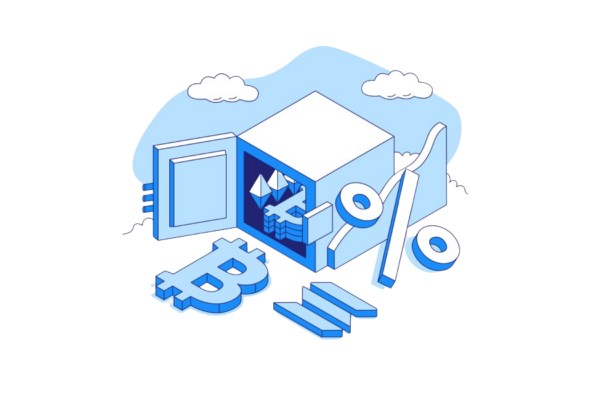
Staking turns ownership into responsibility. Validators put real money on the line, so cheating costs them. The bigger the stake distribution, the harder it is to attack. More than $90 billion was staked on Ethereum at one point, raising the bar for anyone trying to take it down. And unlike mining, staking pools and delegation let anyone join-even with a small bag.
Staking rewards don’t insure against losses. The token can crash, validators can fail, and providers can vanish overnight.
Environmental Efficiency
Proof-of-stake wins big on energy use. Ethereum’s transition cut its carbon footprint by 99.95%. No more mining farms burning electricity to chase blocks. Staking secures the network with code and collateral instead of compute. For investors eyeing how to safely invest in cryptocurrency , that’s a solid reason to prefer PoS chains over PoW ones.
Governance Through Staking
On some networks, staking grants voting power. You can vote on upgrades, treasury spending, or parameter changes. The more you stake-or the more others delegate to you-the louder your voice. It’s democracy, blockchain-style. But with power comes influence. Big stakers can sway decisions, and apathy means smaller holders get overruled. Participate if you care about the network’s future.
The Role of Staking Pools
Pools let small holders team up and meet minimum stake thresholds. Validators take a cut, but the rewards still come through. Pools spread risk across many participants, which helps. But centralization creeps in if one pool controls too much stake. Choose pools with transparent fee structures and strong reputations.
Exchange Staking Trade-offs
Staking via exchanges is easy. Deposit, click stake, earn rewards. But the exchange holds your keys. If it gets hacked, goes bankrupt, or freezes withdrawals, your funds are at risk. Binance and Coinbase offer staking, but they’re custodial-you’re trusting them to act responsibly. Compare their fees, slashing policies, and transparency reports before handing over your tokens.
Solana’s Staking Model
Solana uses proof-of-stake with proof-of-history for speed. Validators are picked based on stake weight. Delegators back validators with SOL, and rewards come from inflation and MEV. The unstaking cooldown is two to three days. SOL loses value to inflation if unstaked, so staying staked often makes sense. Wallets like Phantom and Solflare make delegation simple.
Starknet’s Staking V2
Starknet introduced Staking V2, letting validators stake at least 20,000 STRK and run full nodes. Delegators can support validators with any amount. Withdrawals take 21 days. Validators earn based on stake and performance, and delegators get a share after commissions. Use wallets like Argent or Braavos to delegate.
Other Staking Networks
Networks that support staking
- Cardano: Ouroboros consensus with baker/delegation model. No slashing.
- Polkadot: Nominated proof-of-stake. Slashing applies.
- Tezos: Bakers produce blocks and share rewards. Fees are common.
- Algorand: Pure proof-of-stake with rewards for participation.
- Polygon, TRON, IoTeX: Various staking models with different rules.
Bitcoin and Proof-of-Stake Assets
Bitcoin, Litecoin, and Bitcoin Cash use proof-of-work. Staking isn’t native. Some platforms offer “interest accounts,” but that’s not staking-it’s lending. Those returns depend on the provider’s stability, not the blockchain. True staking stays within proof-of-stake ecosystems.
A 10% return sounds huge until your token drops 50%. Staking rewards alone don’t protect you from market swings.
Staking vs. Traditional Banking
Banks pay fixed interest on deposits. Staking pays variable yields in volatile tokens. There’s no FDIC insurance, no guaranteed principal, and no customer service when things go sideways. But the potential returns-and the chance to earn yield on assets you’d otherwise hold idle-can be tempting. Just don’t mistake crypto yields for safe-harbor bank rates.
Key Takeaways for Stakers
If you’re wondering how cryptocurrency how to make money , staking is one lane-but it’s not the only one. Start small, research deeply, and only stake what you can afford to lose. Watch out for lockups, slashing, and custody risks. Diversify validators and platforms. And remember, staking rewards don’t cancel out price drops. Treat it like a long-term tool, not a quick win.
Final Thoughts on Staking
Crypto staking is powerful-but it’s not for the faint of heart. It rewards patience, diligence, and a tolerance for risk. If you’re trying to figure out how to make money of cryptocurrency , staking is part of the puzzle-but it works best when paired with research, diversification, and a solid understanding of each network’s quirks.

Comments on “What Crypto Staking Means: Rewards, Risks, and How It All Works”
No comments yet. Be the first to share your thoughts.