
A Clear Look at the White House Crypto Reports and the Framework
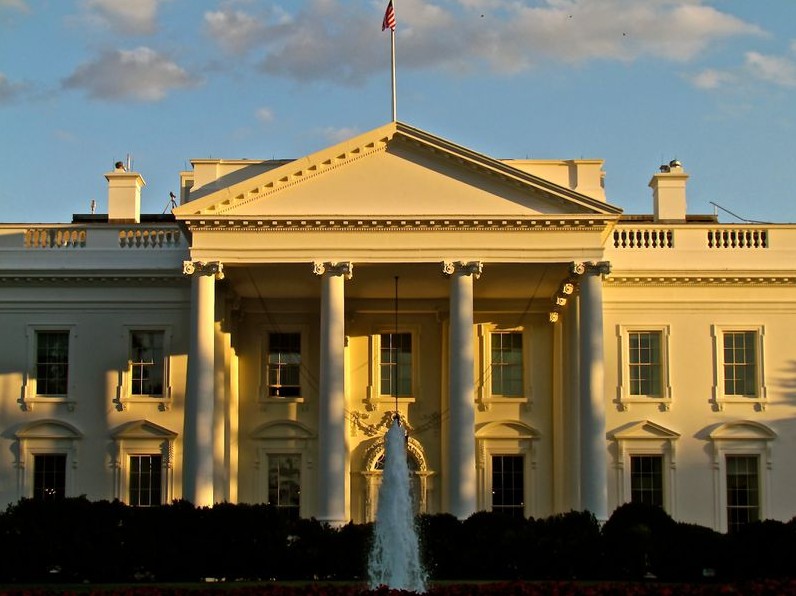
Two Policy Cycles Two Different Approaches
I've been tracking the White House crypto reports for a while now. What stands out is how different the two main policy cycles look. The first came after President Biden signed an executive order in March 2022. The White House, Treasury, Commerce, and Justice departments dropped seven documents on the same Friday - six reports plus a framework fact sheet. Nearly 300 pages covering illicit finance, consumer risks, U.S. competitiveness, nonbank payment providers, real-time payments, and a possible central bank digital currency. The second cycle started with President Trump's January 2025 executive order on digital assets. The Presidential Working Group on Digital Asset Markets issued its final report in July 2025 with more than 100 recommendations. Two administrations, two very different directions.
The 2022 Biden Package What It Actually Contained
The 2022 package was billed as the first comprehensive framework for responsible development of digital assets. But reading through the summaries, the word "framework" feels generous. The documents were full of hedges - things the administration "will consider" rather than firm commitments or deadlines. They were largely summaries of past events, analyses of ongoing research, and recommendations for future action. Progress yes, but not many concrete rules. The package also put unusual emphasis on CBDC design choices, which caught my attention.
Seven documents released in September 2022
- White House fact sheet and framework
- Justice Department report on illicit finance and enforcement
- Commerce Department report on competitiveness
- Treasury Future of Money report
- White House Office of Science and Technology Policy technical report
- Treasury action plan on illicit financing
- Treasury report on consumer considerations
White House Framework and the Nonbank Payment Provider Idea
The fact sheet's most consequential proposal for the industry was a possible federal framework to regulate nonbank payment providers. It didn't expressly name crypto exchanges as the target, but depending on classification, this could have meant a federal licensing system. That would let a qualifying company operate nationally instead of chasing 49 separate state licenses - a long-standing industry goal. The Treasury Future of Money report circled back to this, noting nonbanks increasingly issue money-like liabilities and process payments. Good for competition and innovation, but risky without adequate supervision. A federal framework could also help qualify nonbanks as intermediaries for a possible U.S. CBDC.
Nonbanks are increasingly providing payment services, including issuing money (or money-like) liabilities and processing payments. On the one hand, participation by nonbank payments companies may contribute to higher levels of competition, inclusion, and innovation. On the other, if these firms are not adequately regulated and supervised, there may be risks to consumers, the financial system, and the broader economy.
Justice Department Focus on Illicit Finance and Enforcement
The DOJ report had a distinctly enforcement orientation. It called cryptocurrency the payment method of choice for ransomware and digital extortion, and noted terrorist organizations use it too, though less than traditional tools. The report examined digital asset use across criminal activity types and compared it with fiat currency. It identified DEA, U.S. Marshals, DHS, and Secret Service participation. One operational proposal was the Digital Asset Coordinators network - 150 federal prosecutors specializing in crypto crimes. The report also pushed for better evidence gathering, stronger penalties, support for Bank Secrecy Act requirements, and more resources for sophisticated investigations.
DOJ legislative recommendations
- Apply anti-tipping-off law to cryptocurrency companies
- Strengthen penalties for unlicensed money transmission
- Extend statute of limitations for certain crypto crimes
Commerce Department on U.S. Competitiveness
Commerce looked at how the U.S. could stay competitive in digital assets. Their conclusions called for effective regulatory approaches, international engagement, public-private collaboration, more R&D, skilled workforce development, and educational initiatives at minority-serving institutions. Secretary Raimondo said the framework offers a path to promote U.S. competitiveness, responsible innovation, and leadership. The report also emphasized promoting U.S. digital asset businesses and their products internationally where appropriate.
The framework offers a path forward to promote U.S. competitiveness, responsible innovation and leadership in digital assets. I look forward to engaging with government partners, industry, consumer groups, universities and civil society as we implement the framework.
Treasury Future of Money and CBDC Design Questions
Treasury's Future of Money report went broad on the future of money with substantial CBDC attention. Design questions included the CBDC's role in the payment system, financial intermediaries, wholesale versus retail, and how technical choices affect consumers, institutions, and agencies. The report didn't pick a superior design - it recommended continued research in case a CBDC later serves the national interest. It also pushed for real-time payment system expansion and balanced nonbank payment provider risks against competition and innovation benefits.
Science Office Technical Report on a Digital Dollar
The White House Office of Science and Technology Policy published a technical report examining a possible digital dollar. This office had previously criticized aspects of crypto mining energy use. The report stated a technical design choice "does not presuppose" a CBDC would use distributed ledger. It compared approaches and considered effects on AML compliance, interoperability, privacy, security, and transaction intermediaries. The central privacy principle: sensitive data should be private. The CBDC system should maintain privacy, protect against surveillance, and use privacy by design with data minimization. Officials also said the science office and NSF were creating a digital-assets R&D agenda covering cryptography and other technical issues.
The CBDC system should maintain privacy and protect against arbitrary or unlawful surveillance. The CBDC design, deployment and maintenance should adhere to privacy engineering and risk management best practices, including privacy by design and disassociability.
Treasury Action Plans on Illicit Finance and Consumer Protection
Treasury's second report also focused on criminal uses, identifying ransomware as a major illicit use. It noted some ransomware operators now ask for privacy coins instead of Bitcoin because Bitcoin transactions trace easier. The report listed seven priority actions: monitoring threats, strengthening global AML/CFT efforts, updating the Bank Secrecy Act, private sector engagement, and more coordination measures. The consumer report examined what crypto means for consumers, investors, and businesses. At the time, primary use cases were trading, lending, and borrowing other cryptocurrencies. It recommended supervisory guidance, comprehensive oversight, clearer public info, Financial Literacy Commission work on accessible explanations, and fraud reduction measures.
Treasury priority actions on illicit finance
- Monitor possible threats
- Strengthen global AML and counter-terrorism financing efforts
- Update the Bank Secrecy Act
- Engage with the private sector
- Pursue additional implementation and coordination measures
DeFi Mentions and the Missing CBDC Authority Report
Decentralized finance appeared repeatedly throughout the 2022 documents, but the package didn't identify a particularly unusual DeFi policy proposal. More notably, the documents didn't include the expected Justice Department report on what authority the Federal Reserve had or would need to issue a CBDC. That missing report left a gap in the otherwise extensive CBDC policy treatment. The 2022 materials treated energy use and climate as policy-review areas, but summaries didn't provide specific consumption totals, emissions estimates, or a mining-specific energy policy program.
The 2025 Trump Working Group Report Scope and Direction
The July 2025 report - "Recommendations to Strengthen American Leadership in Digital Financial Technology" - came from the working group established by Trump's January 2025 executive order. The order tasked the group with producing a report within 180 days to develop a federal regulatory framework for digital asset issuance and operation. The report provided a broad blockchain overview and the existing regulatory framework, with more than 100 recommendations to guide federal legislation, agency rulemaking, regulatory guidance, and oversight. The stated purpose: ensure policymakers can make the U.S. lead the blockchain revolution and usher in what they called the Golden Age of Crypto. Many recommendations already appeared in the GENIUS Act, CLARITY Act, or other legislation under consideration.
CLARITY Act and the CFTC SEC Division
The report's core vision was recapturing crypto leadership lost under prior administrations. It supported the Digital Asset Market Clarity Act (CLARITY Act), which had passed the House with bipartisan support. Under this framework, the CFTC would get primary authority over spot markets for digital assets that are not securities. The SEC would keep jurisdiction over digital assets classified as securities under the Howey Test. CFTC oversight of non-security spot markets would address a long-standing industry demand. The proposal sought a sharper division between commodity and securities regulation, though it didn't resolve assets with hybrid or uncertain characteristics.
Proposed regulatory division under CLARITY Act
- CFTC - primary authority over spot markets for non-security digital assets
- SEC - retains jurisdiction over digital assets classified as securities under Howey Test
- Sharper division between commodity and securities regulation
- No final resolution for hybrid or uncertain assets
DeFi Safe Harbors and Regulatory Sandboxes
The report explicitly supported decentralized finance. It recommended safe harbors and regulatory sandboxes as ways to let novel financial products enter the market without bureaucratic delays. The idea: existing legal structures slow blockchain innovation when applied to products that don't fit traditional categories. Safe harbors and sandboxes would let companies test new products while limiting immediate consequences of applying uncertain rules. This felt like a practical acknowledgment that the current framework doesn't map cleanly to DeFi.
Limits of the Security-or-Commodity Classification System
David Krause, emeritus associate professor of finance at Marquette University, argued the continuing security-or-commodity classification has fundamental limitations. Many digital assets have hybrid or emerging characteristics that don't map neatly into either traditional category. Krause cited his earlier support for a risk-based classification grounded in Minskyan financial-instability theory - focusing on a protocol's actual financial behavior and potential instability rather than static asset labels. He also pointed to the EU's MiCA regulation, which combines risk tiers with functional assessments instead of rigid asset labels. The comparison highlights the difference between classifying an asset by purported characteristics versus assessing function, risks, and activities of a particular system.
A continuing security-or-commodity classification system has fundamental limitations. Many digital assets have hybrid or emerging characteristics that do not map neatly into either of the traditional categories.
GENIUS Act and Stablecoin Policy
The report held up the GENIUS Act, enacted July 18, 2025, as a model for integrating blockchain into mainstream finance - calling it the first federal stablecoin framework. The analysis characterized stablecoins as more than efficient digital money, describing them as geopolitical instruments reinforcing U.S. dollar dominance. The working group separately emphasized dollar-backed stablecoins and the dollar's role in the digital-asset economy. The report supported legislation regulating stablecoin issuance while preserving private digital money's competitive and innovative characteristics.
Dollar Dominance and Firm CBDC Opposition
The July 2025 report supported the dollar's continued role through dollar-backed stablecoins but firmly opposed establishing, issuing, or promoting a U.S. CBDC. The working group prioritized privacy, civil liberties, and limits on government overreach. It supported the Anti-CBDC Surveillance State Act, passed by the House on July 17, 2025. This differed sharply from the 2022 Biden package. The earlier Treasury report recommended continued CBDC research without selecting a design, examining wholesale versus retail use and nonbank intermediary roles. The 2025 group didn't leave it open - it opposed a U.S. CBDC and supported legislation to prohibit one.
Bank Capital Custody and Taxation Recommendations
The 2025 report called for changes to capital and custody rules so banks could participate more fully in digital assets. Modernized rules could let regulated banks provide digital asset services without temporary accommodations. The broader strategy: bring digital-asset activities into the existing financial system rather than leave banks on the outside. On taxation, the report recommended treating digital assets as a distinct class subject to modified versions of existing tax frameworks - simplifying compliance while accommodating innovation. This differed from applying every traditional rule without modification to assets without a settled place in the tax system. Taxation was framed as part of the broader market-structure and federal regulatory framework.
Key 2025 report recommendations for financial integration
- Modernize bank capital rules for digital asset participation
- Update custody rules for regulated bank involvement
- Treat digital assets as distinct tax class with modified frameworks
- Simplify compliance while accommodating innovation
- Integrate taxation into broader market-structure framework
Strategic Bitcoin Reserve Announcement
The Strategic Bitcoin Reserve was first announced in March 2025. On March 6, 2025, President Trump issued an executive order establishing the reserve and a U.S. Digital Asset Stockpile. The order placed the reserve in the broader national-security context of U.S. strategic reserves - gold, petroleum, pharmaceuticals, medical supplies, nuclear weapons, and other scarce materials. It established separate Treasury offices to administer and maintain custody of Bitcoin and other digital assets forfeited in criminal proceedings, civil proceedings, and assets collected for penalties. The order directed Treasury and Commerce secretaries to develop budget-neutral acquisition strategies with no incremental taxpayer costs. Within 30 days, each agency head had to provide a complete accounting of all Bitcoin and digital assets held. Krause's analysis noted the July 2025 working group report mentioned the reserve only briefly, without details on operational plans, acquisition mechanisms, safeguards against market manipulation, government accumulation procedures, or insider-trading risks.
Conflicts of Interest and Regulatory Capture Concerns
Krause's critical analysis characterized the administration's digital-asset policy as facing significant conflicts of interest. He pointed to President Trump's and his family's reported direct financial interests - controlling stakes in meme coin projects, stablecoin issuers, and affiliated investment platforms. Reports of a $1.5 million per plate crypto fundraiser and UAE financing involving Trump's own stablecoin were presented as part of a broader pattern of possible personal enrichment linked to policymaking. Senator Elizabeth Warren accused the White House of becoming a "crypto cash machine." Krause argued the appearance of regulatory capture, even if disputed, could undermine major policy initiatives. Industry-friendly appointments like SEC Chairman Paul Atkins and White House Crypto Czar David Sacks were identified as concerns, with policy positions aligned with deregulatory priorities.
Systemic Risk and Consumer Protection Gaps
The critical analysis argued the 2025 report didn't sufficiently address systemic financial risk. Despite basic AML references, it lacked meaningful stress testing of how digital-asset markets might transmit shocks during extreme volatility. The regulation treatment was characterized as a false choice between "pro-innovation" and "anti-innovation," overlooking the traditional mandate of encouraging innovation while maintaining stability and managing systemic risks. Missing elements included stress tests, scenario analysis for market shocks, detailed run risk and payment risk treatment, fuller assessment of stress transmission to banks, and more extensive systemic stability safeguards. Consumer protection was also described as underdeveloped - few concrete proposals for retail investors despite documented fraud, hacks, market manipulation, theft, high volatility, and inadequate disclosures. The emphasis on institutional integration and competitiveness left retail users insufficiently addressed even though they often bear disproportionate losses.
Missing systemic risk elements identified in analysis
- Stress tests for digital-asset markets
- Scenario analysis for market shocks
- Detailed treatment of run risk and payment risk
- Fuller assessment of stress transmission to banks and institutions
- More extensive safeguards for systemic stability
Policy Tracker and Related Executive Actions
The U.S. Crypto Policy Tracker, last updated June 2026, covers legislative and regulatory developments across blockchain, cryptocurrencies, digital assets, stablecoins, NFTs, Web3, federal agency actions, executive orders, and industry groups. The January 23, 2025 executive order described the digital-asset industry as critical to U.S. innovation, economic development, and international leadership. It established the Presidential Working Group within the National Economic Council with two initial deadlines: within 30 days, identify every regulation affecting the sector; within 60 days, recommend whether to rescind or modify each. For non-regulatory materials, agencies were directed to consider formal adoption. These instructions formed the basis for the working group's later recommendation that agencies reconsider or remove rules impeding digital-asset innovation.
On August 7, 2025, another executive order - "Guaranteeing Fair Banking for All Americans" - responded to what the administration called discriminatory practices by banking regulators and financial institutions. The order said some people were denied banking services without material, measurable, justifiable risk, instead because of political beliefs, religious beliefs, protected affiliations, political views, or lawful business activities. It established federal policy that no person should be denied financial services because of constitutionally or statutorily protected beliefs, affiliations, or political views. The order specifically identified firearms and digital assets as industries facing discriminatory banking practices, citing difficulties for digital-asset market participants obtaining banking services. The administration associated this with "Operation Choke Point 2.0" and said it had ended the initiative by working to end regulatory efforts denying banking services to the digital-assets industry.
If you're trying to stay current on this space, finding a reliable source for crypto news matters. I've found the top sites for crypto coverage tend to break these policy developments early. For mobile tracking, a good app for crypto news helps. And if you're newer to this, resources like beginner-friendly crypto explainers can help make sense of the regulatory landscape. The latest developments in cryptocurrency policy move fast, so having good info sources is practical.



Comments on “A Clear Look at the White House Crypto Reports and the Framework”
No comments yet. Be the first to share your thoughts.