
Crypto Brokerage Explained: Fees, Execution, and Risk Controls for Traders
Crypto Brokerage: Fees, Execution, and Risk Controls for Traders
A crypto brokerage is easy to picture as an app. That picture is too small. Behind the screen, the broker has to connect clients to trading venues, send orders, handle or arrange custody, settle balances, set fees, and keep records. Some firms also offer margin, lending, or tokenized products.
The question I would ask is not “Which app has the most buttons?” It is “Who controls each step of the trade?” That includes the party that holds assets, picks the venue, makes the trade, and keeps the audit trail. If those answers are vague, the screen is not telling you much.
That matters when you search for a crypto broker near me . A local search can produce names, but it cannot show whether a firm is licensed, how it routes orders, or who controls customer assets. I would check those facts one by one instead of trusting a clean logo.
Four crypto brokers reviewed for 2025
What Crypto Brokerage Actually Does
Crypto brokerage is the account and order layer between a client and one or more trading venues. An exchange is one marketplace. A brokerage can sit beside several exchanges, over-the-counter desks, market makers, and onchain venues, then route an order according to price, size, rules, and risk limits.
Core parts of a crypto brokerage
- Account access: giving clients a place to view balances, place orders, and manage their settings.
- Order routing: sending orders to exchanges, market makers, over-the-counter desks, or onchain venues.
- Custody: holding digital assets and keys under set policies, or naming an outside custodian.
- Settlement: moving cash and assets after trades under agreed rules.
- Fees and credit: setting commissions, spreads, margin charges, and revenue-sharing terms.
- Controls and records: checking clients, limiting risk, monitoring trades, and keeping proof of each step.
These roles do not always belong to the same company. A bank may act as custodian and agent broker, while a partner holds the exchange account. Another firm may quote two-way prices and hold its own inventory, which makes it a dealer. That job carries more market risk, so you should never assume that every crypto brokerage does it.
Why Traders and Banks Add Crypto
Brokers have client-demand and business reasons for adding crypto. Some are real operating needs, while others are sales claims. Crypto markets trade around the clock, but an open market does not promise instant final settlement. Blockchain transfers may be near real time, yet network, funding, compliance, and venue rules can still add steps.
Common reasons for adding crypto
- Access to another pool of trading volume and liquidity.
- Trading and settlement outside traditional market hours.
- Stocks, ETFs, funds, crypto, and other assets in one account.
- Demand from younger investors who already hold digital assets.
- Access for clients in more places, subject to local rules.
- New revenue from trading, lending, staking, interest, or structured products.
Cross-border reach needs careful wording. Crypto can cross borders, but a regulated brokerage still faces KYC checks, anti-money-laundering rules, sanctions screening, licenses, and country-specific limits. Banks also depend on agency execution, spreads, financing, collateral, and structured products. Digital assets can add new assets to those services, but they do not remove the work.
Fireblocks puts the bank role this way:
Digital assets do not replace the role banks play in those functions; instead, they extend it.
Fees, Commissions, Spreads, and Other Costs
The first cost is often hidden by the word “free.” Wallet software may cost nothing, but buying, selling, or transferring crypto can involve exchange fees and network gas charges. Staking services may add their own fee. A brokerage can also charge a spread, commission, withdrawal fee, financing charge, or some share of the revenue it earns.
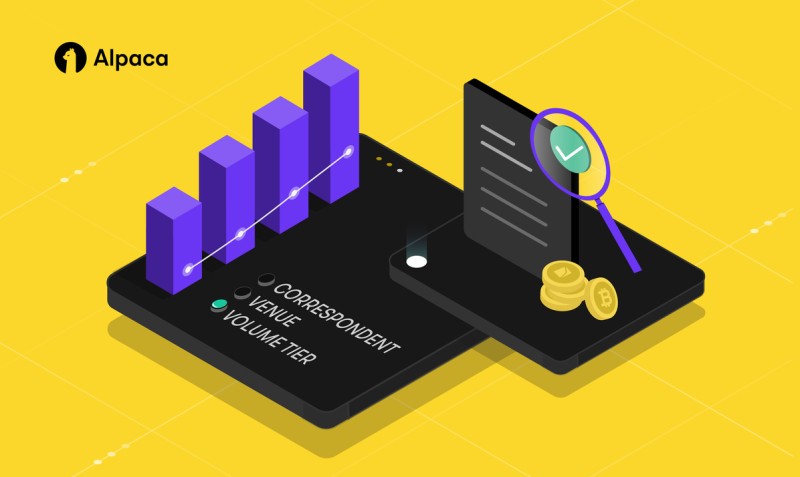
Some brokerage APIs let a partner set fees by venue, volume tier, or digital asset. The charge can be a commission, a spread, or a mix of both. Rolling volume tiers can set rates over time, while stored records show which tier applied to past trades. Partners may also share revenue from trading fees, deposits, and withdrawals.
Costs to put on one page
- Venue fees: maker and taker charges for each trade.
- Spread: the gap between the quoted price and a fair reference price.
- Network fees: the cost of submitting or confirming a blockchain transaction.
- Service fees: charges for transfers, staking, lending, or other added services.
- Credit costs: interest and collateral rules if margin or financing is used.
- Asset costs: stock commissions for a tokenized security may differ from direct crypto costs.
“Commission-free” can also have a narrow meaning. One U.S. disclosure in the source set applies that label to self-directed accounts trading U.S.-listed securities through an API. It does not mean that all crypto trading costs are zero. Searching for the lowest-fee crypto exchange should start a comparison, but ask for the full cost of a buy, sale, transfer, and withdrawal before choosing.
Five Indian crypto brokers compared
Why Crypto Order Execution Is Hard
Crypto liquidity is split across exchanges, over-the-counter desks, market makers, and onchain venues. There is no shared equity-style tape and no national best bid and offer that shows the whole market at once. A broker can therefore see a good price on one venue while a better or deeper price sits somewhere else.
A smart order router acts as a traffic controller. It checks approved sources, sends orders or parts of orders, and chooses routes under set rules. Data-center colocation can reduce the distance between the trading system and a venue. Off-exchange settlement and netting may also reduce the amount of margin kept at each exchange and lower exposure to an exchange failure.
Execution measures that matter
- Slippage: the difference between the arrival midpoint and the actual fill.
- Fill rate: the part of an order that receives a fill.
- Spread paid: the cost between the midpoint and the price paid by the client.
- Market change: the price move between order arrival and execution.
- Source quality: fills, rejections, depth, quote speed, and volume from each venue.
If the goal is to exchange crypto for the best price , choosing a familiar exchange is not enough. The broker needs a sound reference price, healthy liquidity sources, and records that show how the order moved from arrival to fill.
How to Measure Best Execution
A fill cannot be judged without a credible reference price. Comparing it with the broker’s own quote may turn the test into a self-check. Comparing it with one exchange may hide better liquidity elsewhere. A stronger method uses an aggregated midpoint built from several exchanges and data from outside the pool that handled the order.
Order size matters too. A $10,000 order may face a different market from a $1 million order. Large parent orders are often broken into smaller child orders, but market conditions can change between fills. Waiting for a report after every child order has finished can hide slippage that was building during the trade.
A simple execution review loop
- Set an independent benchmark before measuring the trade.
- Measure results across several order sizes, not one lucky fill.
- Break large orders into smaller pieces when the plan calls for it.
- Review slippage and market changes while the order is still running.
- Use the findings to adjust the next route and keep an audit record.
This is the point to remember:
Execution quality cannot be measured without a credible reference price.
MiCA sets best-execution duties for EU crypto service providers, while FINRA treats best execution as a standing U.S. compliance focus. Laws and rule details can change, so check the rule that applies to your trade. Even where legal wording differs, the practical test remains plain: did the client have a fair chance to receive a good price under the conditions at the time?
Custody Choices: Direct, White-Label, and Self-Custody
Custody asks a basic question: who controls the keys and the assets? In a direct bank model, wallet policies, approvals, user roles, chain-level rules, and transaction records stay under the bank’s control. A white-label broker-custodian can help a bank enter faster, but custody and execution remain with the partner, and the bank shares control and revenue.
Main custody models
- Direct custody: the bank operates the wallet system and keeps transaction control in house.
- White-label custody: a partner supplies brokerage and custody while the bank presents the service.
- Off-exchange escrow: assets stay in digital escrow and move only when agreed conditions are met.
- Self-custody: the user holds the keys and manages security, backups, transfers, and recovery.
These models create different duties. A self-custodied wallet gives the user more control, but the user also carries the security burden. A brokerage account can handle trading, compliance, settlement, and support while a provider controls the required credentials. Providers may cite ISO 27001 or SOC 2 audits, but those reports are not the same as government insurance against market loss or a provider failure.
Prime Brokerage and Cross-Venue Finance

A prime crypto brokerage gives larger clients more than a trading screen. It can combine accounts, margin, collateral, financing, and settlement across several markets. That can make it easier to trade spot, perpetual swaps, and futures without tying up the same capital at every venue.
Common prime brokerage services
- One account for spot, perpetual swap, and futures exposure.
- Cross-venue margin based on the client’s full collateral picture.
- Collateral movement under set transfer and approval rules.
- Client financing or matched-book lending.
- Off-exchange settlement, netting, and reduced exchange exposure.
A matched book is different from full dealing. In a matched book, the bank helps facilitate trades and holds inventory only for settlement. It avoids taking a broad position as a market maker. Off-exchange settlement can place assets in governed escrow, but it needs clear transfer rules and live reconciliation. Whether a bank can use crypto as collateral or quote its own prices also depends on capital rules and enough market depth.
Brokerage APIs and the User Experience

Good brokerage tech removes repeated plumbing. One API can give a firm access to several asset classes, market data, orders, balances, and account records. FIX-like standards could also reduce the work needed to connect trading firms with venues. The promise is not fewer controls; it is more standard handling for credentials, permissions, orders, reports, and compliance records.
When comparing crypto apps in the USA , the Rain case in Bahrain offers a useful design lesson, not a list of U.S. options. Rain used region-based KYC rules, clear currency search, portfolio views, and legal pages that could change by location. The same lesson travels: a trading app should make identity checks, balances, fees, and policy terms easy to understand.
Bitcoin trade cost test across three Indian brokers
Pre-Trade, Wallet, and Post-Trade Controls
Crypto brokerage needs controls before, during, and after a trade. Speed does not replace them. Before routing an order, the broker should know whether the asset, client, venue, and counterparty are allowed. It should also apply account limits and suitability rules before the order reaches a market.
Controls across the trade life
- Approved assets, venues, clients, and counterparties.
- Identity checks, KYC rules, and suitability checks.
- Portfolio limits, exposure rules, and position limits.
- Wallet roles, multi-party approvals, and separation of duties.
- Sanctions screening and ongoing exposure checks.
- Settlement rules, live reconciliation, and proof of asset origin.
- Onchain anti-money-laundering checks, Travel Rule records, and audit trails.
Operations must also keep working when a system fails. That means spare systems, clear staff duties, failover plans, and round-the-clock incident response. Frameworks such as NIST and DORA give useful examples of control language. Hey, don’t skip this part: a fast fill is not a safe or well-governed trade by itself.
Near-instant settlement does not remove the need for post-trade oversight.
The Five Stages of Bank-Led Crypto Brokerage
The five-stage model gives a useful picture of how banks can add crypto brokerage. A bank can begin with a small pilot and later bring custody, execution, financing, dealing, and tokenized products under one governed system.
Five stages of bank-led crypto brokerage
- Stage 1, pilot: offer limited spot trading, often through a white-label partner. It can be quick, but control and revenue are shared.
- Stage 2, direct custody and agency execution: bring wallets and order routing under bank rules, with policies, approvals, and approved venues.
- Stage 3, prime brokerage: add cross-venue margin, unified collateral, financing, off-exchange settlement, and matched-book support.
- Stage 4, dealing and liquidity: quote two-way prices, hold an inventory, hedge exposure, and sometimes internalize client orders.
- Stage 5, structured products: add tokenized notes, dual-currency products, equity-linked instruments, deposits, and yield-based assets.
The order matters because custody and agency execution can come before a bank freely holds crypto inventory. One cited ECB snapshot found only about €1 million in crypto assets on euro-area bank balance sheets. The source treats that as a sign of tight capital limits. Principal dealing also needs enough market depth, clear approval for new asset classes, and sensible capital treatment. Tokenized assets and tokenized high-quality liquid assets still depend on those market and supervisory choices.
Rules, Licenses, and Asset Protection
Regulation starts with the exact legal entity, not the app name. One firm may have a separate custodian, exchange, broker-dealer, and lending company. KYC, anti-money-laundering checks, sanctions rules, licensing, and local product rules decide who can use each service. When people ask what makes a reliable crypto exchange , the legal entity and its rules deserve attention before the interface.
One U.S. disclosure in the source set shows why this distinction matters. Its crypto unit is a FinCEN-registered money services business and is not a FINRA or SIPC member. Its securities unit is a separate FINRA and SIPC member. Cash held in a brokerage account can also differ from cash placed in an FDIC bank sweep. Those protections may have legal limits, and they do not cover market losses, a firm’s own failure, or employee misconduct.
A tokenized asset needs its own check. A third party may create a token that gives economic exposure to shares or another asset. The token holder may not own the underlying company, receive voting rights, or have the same legal claim as a direct shareholder. Buying a public digital-asset treasury share through a brokerage account is therefore not the same as owning the tokens held by that company.
Trading and Investment Risks
Crypto can rise fast, but it can also fall with little warning. Volatility, market manipulation, flash crashes, exchange failures, and cyberattacks can cause large losses. A broker may control its own systems well and still carry assets on a network or venue that comes under stress. Market losses and provider risks are not the same problem.
Risks to keep in view
- Price risk from sharp swings, manipulation, or a sudden collapse.
- Counterparty risk from exchanges, brokers, lenders, and stablecoin issuers.
- Key and software risk when a wallet, private key, or bridge is used.
- Smart-contract and liquidity risk in lending, staking, and DeFi services.
- Legal risk when rules differ by country or change over time.
- Sale risk when market depth disappears and quotes pull away.
Automated trading adds more failure points. A lost connection, power loss, computer crash, or software defect can lead to missing, repeated, or wrong orders. Conditional orders are “Not Held” and are triggered on a best-efforts basis, so a price may have moved before the order arrives. Margin can add interest, more calls for collateral, and losses greater than the cash deposit. Market hours do not remove any of these facts.
All investments carry a risk of total loss.
A Practical Brokerage Comparison
No single list can name a best cryptocurrency trading platform for every trader. A simple retail app may fit one person and fail an institution’s audit needs. I would use the same checks for both, then weigh the trade-offs against the client’s assets, size, and risk.
Eight questions to ask about a crypto brokerage
- Legal status: What is the exact entity, where is it licensed, and which entity receives client orders and funds?
- Custody: Does the broker hold assets directly, use a partner, use governed escrow, or leave the keys with the user?
- Execution: Can it name its venues, routing rules, reference prices, slippage records, and fill reports?
- Full cost: Are commissions, spreads, gas, transfer charges, service fees, margin interest, and revenue shares all clear?
- Settlement: How do withdrawals work, how long can they take, and what happens when a network or venue is under stress?
- Security and operations: Are roles separated, approvals recorded, systems backed up, and incidents handled around the clock?
- Legal protection: Is the asset covered by SIPC, FDIC, another rule, or none of them, and does a token grant direct ownership rights?
- Fit: Can the service handle the client’s country, account type, order size, trading hours, and tolerance for loss without pretending the risk has gone away?
Comments on “Crypto Brokerage Explained: Fees, Execution, and Risk Controls for Traders”
No comments yet. Be the first to share your thoughts.