How to Build and Test Smart Contract Apps for Blockchain Projects

How to Start Building Smart Contract Apps
Smart contract apps are closer than they seem. You don't need a PhD to start building them. I'll walk through setting up the environment, writing a small contract in Python or Solidity, testing it, and sending it live - so you can feel how blockchain logic behaves in practice.
If you're new, you might have searched crypto currency for absolute beginners before. That's a fine place to start. The basics become simple once you see a contract run.
What Are Smart Contract Apps
A smart contract is a self-executing piece of code stored on a blockchain. It automatically enforces the terms of an agreement when preset conditions are met. Because the code runs on a distributed ledger, the contract becomes immutable once deployed and no longer requires a trusted intermediary.
Because the code runs on a distributed ledger, the contract is immutable once deployed.
Smart contracts power decentralized applications - often called dApps - across finance, supply chain, identity, gaming, and more. Their key traits include automation, transparency, trustlessness, immutability, and global reach. I like that anyone with a node or a wallet can use them.
Why Smart Contract Apps Beat Old Contracts
Traditional contracts lean on lawyers, banks, and middlemen. Smart contract apps cut those out. They also reduce manual errors and lower operational costs. The code does the work without human intervention.
Core Benefits
- Eliminating intermediaries removes fees and turnaround time.
- Fewer errors thanks to code-based execution.
- Lower operational costs with simpler auditing.
- Enhanced security through cryptographic guarantees.
- Programmability for complex business logic.
- Composability, so contracts interact with one another.
- Auditability on an immutable ledger.
Participants do not need to trust each other; the code enforces outcomes.
These points show why many builders prefer smart contract apps over paper contracts. The savings are real, and the trace is clear.
Smart Contracts Explained in Six Minutes
Languages and Platforms for Smart Contract Apps
There are many ways to write smart contract apps. Solidity is the common pick for EVM chains. Vyper is security-focused. Python can run on Algorand. Cadence on Flow. Noir for private zero-knowledge proofs. Scilla on Zilliqa. Rust for high-performance apps on Solana.
Common Stacks
- Solidity (EVM) for DeFi, NFTs, and DAOs, using Hardhat, Truffle, or Remix.
- Vyper for security-focused contracts with Python-like syntax.
- Python on Algorand for AI-blockchain integration and quick prototypes.
- Cadence on Flow for NFTs and role-based access.
- Noir (Aztec.nr) for private smart contracts with zero-knowledge.
- Scilla on Zilliqa for high-throughput private contracts.
- Rust on Solana for high-performance applications.
Developers choose based on target chain, privacy needs, and team skills. If you've ever wondered what blockchain actually does here, it hosts the code that runs itself. A helpful documentation site helps you compare.
Build a Solana dApp in Five Minutes
Algorand Python for Smart Contract Apps
Algorand released a full Python SDK for writing and deploying smart contract apps directly on its network. This brings Python's readability to blockchain logic. You can write contracts in familiar syntax and even integrate AI models into on-chain logic - like publishing verifiable predictions.
Key improvements include pattern matching, simpler box storage, faster compilation, better error messages, and a language server for IntelliSense. I found the smaller contracts feature neat for lower gas overhead on end users.
Why Python Helps
- Write smart contracts using familiar Python syntax.
- Integrate AI models directly into on-chain logic.
- Leverage existing Python libraries for data processing.
- Maintain cryptographic security while experimenting.
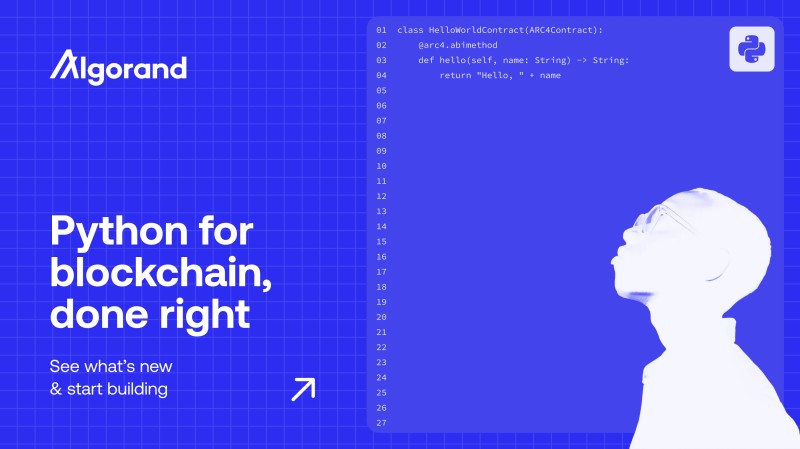
The AlgoKit toolkit bundles compiler, local testnet, and deploy scripts. You can start building immediately. Some folks look for the best crypto applications examples; Algorand's Python gallery is a good stop. The official AlgoKit page shows the setup.
A Curated Journey Through Smart Contract App Development
From Zero to Six-Figure Smart Contract Developer
Private Smart Contract Apps with Aztec.nr
Aztec.nr is a private smart-contract framework built on Noir. It lets you write contracts that keep state private while still using blockchain composability. Without it, plain Noir can't emit events or call other contracts easily.
The note-management logic is already proven and audited, reducing the risk of bugs.
What Aztec.nr Gives You
- Contracts with callable functions and inter-contract calls.
- Persistent state variables across transactions.
- Access to msg.sender and call context.
- Encrypted and unencrypted events for privacy.
- Built-in cryptographic primitives like signatures and hashes.
- Cross-chain message passing between L1 and L2.
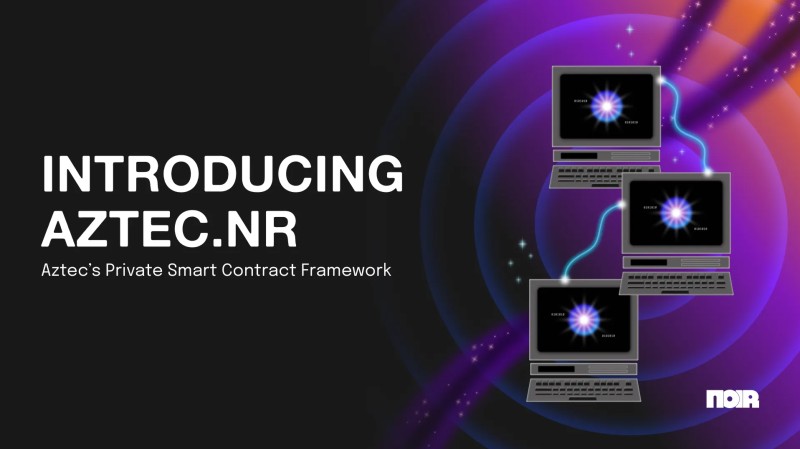
A private token example shows two lines of user code handling authorization, note syncing, and encryption. The framework ships with swap, lending, and card-game examples. If you ask how blockchain works in cryptocurrency with privacy , this is a clear path. The repository is open for study.
Start with Ethereum and Solidity
Solidity is the dominant language for Ethereum smart contracts. I'll show a simple Hostel contract example from Remix IDE. You can open Remix in a browser, pick the Solidity tab, and use the JavaScript VM for local testing. This is a gentle step to launch a simple blockchain app today.
The Hostel contract manages rooms: landlords add rooms, tenants sign agreements, pay rent, and the landlord finalizes. It's under 100 lines. The code is small enough to read in one sitting. You learn how money moves without a third party.
Steps to Deploy in Remix
- Open Remix IDE and select the Solidity tab with JavaScript VM.
- Write or paste the Hostel contract code.
- Click Solidity Compile and fix any errors.
- Switch to the Deploy tab and click Deploy.
- Interact with addRoom, signAgreement, and payRent functions.
- Check transaction history in the Remix terminal.
No third-party escrow: Tenants pay directly to landlords.
Gas fees in wei apply on mainnet but not in the local VM. For production, use Ganache or test networks, add MetaMask, and connect a front-end with Web3.js or Ethers.js. Some curious readers may search how to create your own cryptocurrency , and this contract shows token-like flows. The same contract logic can be reused; only the environment changes.
A Curated Journey Through Smart Contract App Development
Smart Contracts Simply Explained in Plain English
Security Steps for Smart Contract Apps
Building secure smart contract apps needs a multi-layered approach. I care about this because bugs can drain funds. Use a secure development lifecycle from design to monitoring. Static analysis tools catch many issues early.
Common Vulnerability Patterns
- Reentrancy: external calls before state updates; use checks-effects-interactions.
- Integer overflow/underflow; use SafeMath or Solidity 0.8+ built-ins.
- Access control bypass; centralize role checks with OpenZeppelin.
- Front-running; use commit-reveal schemes or private mempools.
- Timestamp manipulation; rely on block numbers, not block.timestamp.
- Denial of service via gas limits; limit loop iterations.
Every transaction incurs a gas cost denominated in wei, the smallest unit of ETH.
Tools like Slither, MythX, and Echidna help scan and fuzz. Manual audits from firms like Certik add assurance. If you want the best blockchain certifications out there , Cyfrin or Consensys Academy are options. A style guide and exhaustive unit tests go a long way.
A Curated Journey Through Smart Contract App Development
What Are dApps? Twelve Real-World Examples
Testing Smart Contract Apps
Testing smart contract apps is different from web apps because on-chain code can't be patched easily. I always run tests before deploy. Use unit, integration, regression, compliance, and end-to-end tests to cover the bases.
Testing Layers
- Unit testing with Foundry forge test or Truffle Mocha.
- Integration testing with Hardhat network or Ganache CLI.
- Regression testing by re-running the full suite after changes.
- Fuzzing with Echidna to inject malformed inputs.
- End-to-end with Cypress and MetaMask Flask.
A pragmatic workflow: create a local blockchain, automate tests in CI, do manual exploratory testing, then monitor post-deployment. Early detection prevents expensive exploits. A marketplace for digital artwork as NFTs needs tests for minting and royalty splits. Neglecting front-end integration is a common pitfall I warn about.
Every test is versioned alongside the code, giving traceability.
Real Uses of Smart Contract Apps
Smart contract apps already power many industries. DeFi like Uniswap and Aave enable token swaps and lending. NFTs like CryptoPunks show collectible art. Real-estate tokenization with Propy automates escrow. Supply-chain tracking with IBM Food Trust proves delivery.
Example Use Cases
- DeFi lending platforms verify collateral liquidation logic.
- NFT marketplaces test minting and metadata standards.
- Supply-chain tracking validates immutable journey steps.
- Governance DAOs ensure voting power calculations.
- Insurance claim settlement tests payout triggers.
- Gaming contracts implement time-locked escrow for fairness.
Stablecoins like XUSD use Solidity ERC-20. Identity platforms use zero-knowledge proofs. If you want to understand crypto as a beginner , these examples show real value. The tech is not just theory; it moves money and goods.
A Curated Journey Through Smart Contract App Development
Tools to Build Smart Contract Apps
A good toolchain makes writing and deploying smart contract apps easier. Remix is a browser IDE. VS Code with Aderyn gives security diagnostics. Hardhat and Foundry are popular frameworks. I use Remix when I want a quick test.
Helpful Tools
- Remix IDE for browser-based editing and debugging.
- Hardhat for Node-based tasks and wallet integration.
- Foundry for fast Rust-based testing with forge.
- Truffle for stable migrations and artifacts.
- Scaffold-ETH for React front-end boilerplate.
- Tenderly for real-time simulation and debugging.
Storage off-chain uses IPFS or Arweave. Monitoring uses Blocknative or Dune Analytics. You might search for blockchain communities near you to find local dev meetups using these tools. The Remix site is free to open.
Rules and Governance for Smart Contract Apps
Smart contracts are immutable, but the logic can raise legal questions. GDPR in the EU affects personal data. AML/KYC layers often sit before deposits. Token offerings may be securities. Planning for this early saves trouble.
Governance Frameworks
- DAO structures with on-chain voting and quorum.
- Upgrade mechanisms like UUPS proxies with timelocks.
- Role-based access control via OpenZeppelin AccessControl.
- Bug bounty programs on HackerOne for crowdsourced audits.
Smart contracts are technically immutable, but the logic they encode can still raise regulatory questions.
Insurance for exploits exists via Nexus Mutual in some regions. I think it's smart to read the docs before launch. The OpenZeppelin library helps with access control patterns.
Keeping Smart Contract Apps Upgradable
A contract's life doesn't end at deployment. Planning upgrades is critical. UUPS proxy lets owners replace implementation. Beacon proxy uses a central beacon. Diamond standard supports modular facets. Each has trade-offs.
Upgradability Patterns
- UUPS Proxy: owner-controlled upgrade, needs careful access.
- Beacon Proxy: central upgrade point for many proxies.
- Diamond Standard: facets hold logic, dispatcher routes calls.
Gas optimization techniques: pack structs, cache storage, avoid extra storage writes, emit events for indexing. Layer-2 rollups like Arbitrum help scale. If you ask how to get crypto for testing , use testnet faucets. The Arbitrum site explains rollups.
What's Next for Smart Contract Apps
Emerging trends include AI-generated code and AI-integrated contracts. Algorand Python supports AI model publishing. Fully private DeFi with Aztec.nr aims for hidden transactions. Modular contracts via Diamond architecture reduce risk of breaking old functions.
Decentralized identity integration with ERC-735 proposals embeds proofs. Programmable money and smart legal agreements may auto-execute via oracles. The field stays practical, not just hype. I watch these shifts with interest but keep my code simple.
Learning Resources for Smart Contract Apps
There are many places to learn. Official docs from Ethereum.org, Flow, Algorand, Aztec. Online courses on Udemy or Consensys Academy. Communities on Discord and Reddit. I started with plain tutorials and built small.
Open-Source Projects
- OpenZeppelin contracts library, battle-tested.
- Flow contracts for NFT Storefront v2.
- Aztec.nr repo for private contract framework.
- Foundry repo for fast testing framework.
Whether you are just starting or looking to deepen your expertise, there are numerous resources available.
You can also read the Algorand Python examples to see real code. A crypto currency book for beginners plus these repos makes a solid mix.
Sample Project: A Simple Smart Contract App
The Hostel example can be reproduced locally. Create a project folder, install web3, write Hostel.sol, write a test in JS, run truffle or hardhat test, deploy locally. Then export the ABI for a front-end with React or Vue. This shows how smart contract apps connect to users.
You don't need a PhD. I hope this gentle walkthrough helps you feel blockchain logic in practice. The contract is small but teaches rent, deposit, and termination. Try it on a local VM first to avoid real fees.
Flow Ecosystem Smart Contract Work
The Flow team publishes a roadmap of smart contract tasks. They focus on interaction templates, NFT Storefront v2 docs, fungible token metadata, gaming contracts, and staking slot selection. This gives community members a way to contribute.
Near-Term Priorities
- Interaction Templates for on-chain transaction data framework.
- NFT Storefront v2 documentation for generic marketplace contract.
- Fungible Token Metadata Views to extend standard.
- Gaming Smart Contracts for time-locked escrow and commit-reveal.
- Streamlined Token Standards v2 for safety upgrades.
- Offers Smart Contract open sourcing for NFT offers.
Lower priority items include tech debt cleanup and Cadence style guide. I like that they ask for help openly. If you build smart contract apps on Flow, check the Flow docs often.



Comments on “How to Build and Test Smart Contract Apps for Blockchain Projects”
No comments yet. Be the first to share your thoughts.